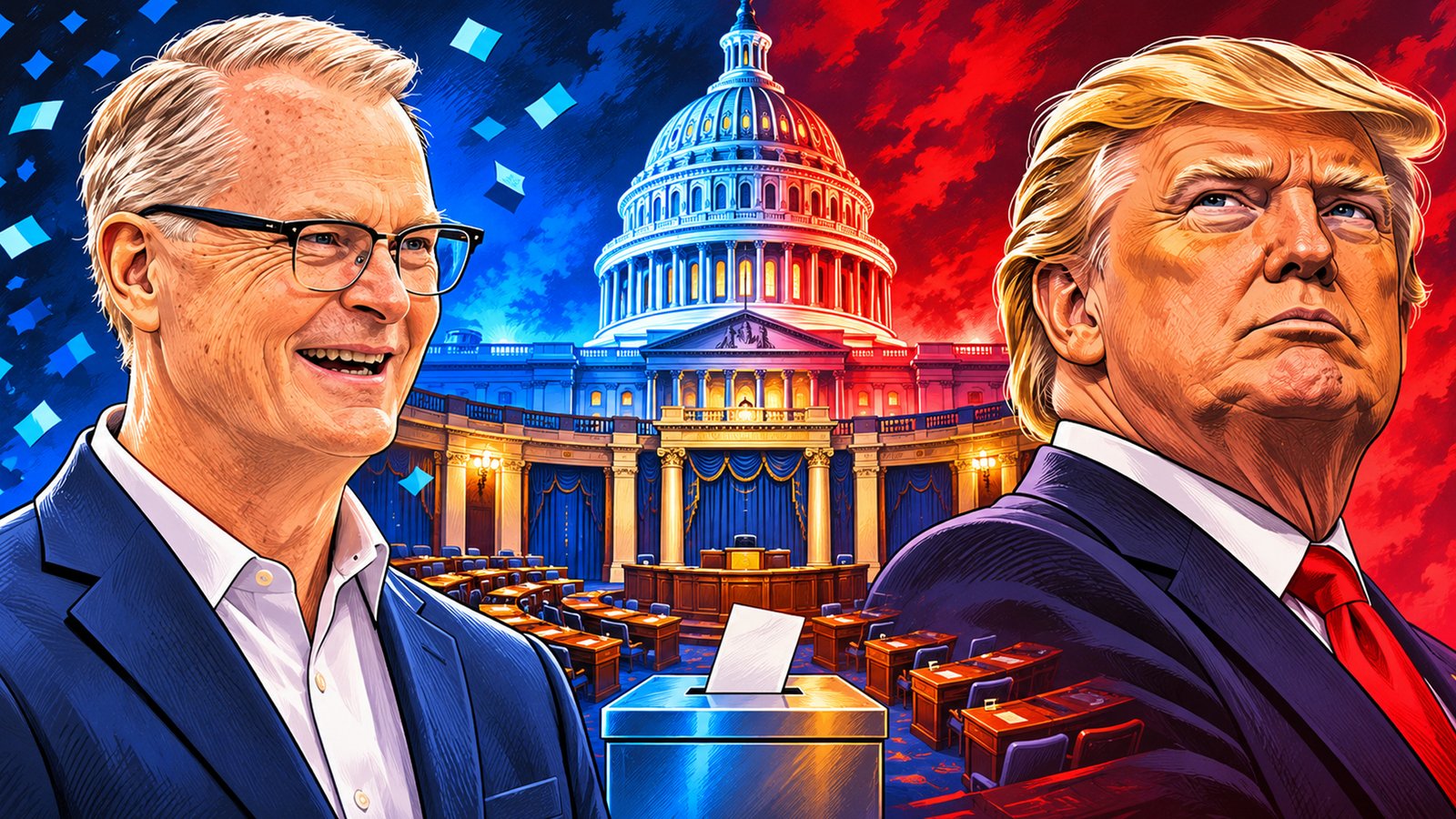
The Democratic Party’s sweeping victory in the 2026 US midterm elections has dealt a major political blow to President Donald Trump, with the party taking control of both chambers of Congress. The result is expected to influence the final two years of Trump’s presidency and could have important implications for India’s trade negotiations, exports and economic relationship with the United States.
The Democrats’ victory in the November 3 elections marks a significant shift in Washington’s political balance. The party secured control of the Senate and the House of Representatives, ending the Republicans’ dominance of Congress and giving the opposition greater power to challenge the administration’s policies.
The results reflect growing voter dissatisfaction with the Trump administration, particularly over rising living costs, economic uncertainty, tariffs and the US military conflict with Iran. The election also highlighted concerns about the direction of the country and the President’s handling of domestic and international issues.
For India, the outcome comes at a particularly important time. New Delhi and Washington have been negotiating a bilateral trade agreement amid tensions over American tariffs, India’s purchases of Russian crude oil and broader disagreements over trade and foreign policy.
While the Democratic victory could create opportunities for India to negotiate more favourable terms, it could also introduce fresh uncertainty into the trade relationship.
Trade negotiations may face a new direction
One of the biggest questions following the US midterm elections is how the change in congressional control will affect the India-US trade deal. The two countries have been attempting to finalise an agreement for several months, with tariffs, agricultural market access and India’s purchase of Russian oil emerging as key sticking points.
Trump’s administration had earlier imposed steep duties on Indian exports, with tariffs on several products reaching 50% before being reduced to 18% for most Indian goods. The move had created uncertainty for Indian exporters, particularly businesses dependent on the American market.
The Democratic takeover could give Congress greater authority to scrutinise Trump’s trade policies. Lawmakers can use hearings, investigations, budgetary powers and legislative oversight to question decisions taken by the administration.
This could make it more difficult for Trump to pursue certain trade measures without facing political resistance. For India, the development could provide some breathing room in negotiations and reduce pressure to accept trade conditions that may not be favourable to its domestic industries.
However, the change does not automatically mean that the India-US trade agreement will be finalised sooner. Industry representatives believe the negotiations may continue along their existing course, as the President retains considerable authority over trade policy.
The Global Trade Research Initiative (GTRI) has also suggested that Trump’s electoral setback could encourage his administration to pursue a quicker agreement with India to demonstrate progress on international trade negotiations.
Russian oil purchases remain a major concern
India’s continued purchase of Russian crude oil is another important issue that could influence bilateral relations. Washington has previously threatened additional tariffs on countries buying Russian energy, raising concerns among Indian exporters.
A law signed by Trump in September provides for tariffs of up to 100% on goods from countries that continue purchasing Russian oil or gas, subject to specified conditions. India is among the countries potentially exposed to these measures because of its substantial Russian crude imports.
Although the administration issued a waiver in October, the underlying legislation remains in place. This means the possibility of additional duties cannot be completely ruled out.
Democratic control of Congress could increase scrutiny of the administration’s decisions on Russia, energy security and trade. However, it does not remove Trump’s ability to use existing executive powers or reconsider the waiver.
For India, maintaining access to affordable energy while protecting its exports to the US will remain a difficult balancing act.
H-1B visas and Indian technology workers
The election results could also have implications for Indian professionals working in the United States, particularly those employed in the technology sector.
The Trump administration’s restrictions on the H-1B visa programme have been a concern for Indian IT professionals and companies that depend on skilled foreign workers. The proposed $100,000 fee for certain new H-1B petitions had added to uncertainty for employers and applicants.
A Democratic-controlled Congress could increase scrutiny of immigration restrictions and examine their impact on American businesses that rely on international talent.
However, immigration policy largely remains within the executive branch’s authority in several important areas. Therefore, the change in congressional control does not guarantee an immediate reversal of existing restrictions.
Defence ties likely to remain strong
Despite the political changes in Washington, India’s defence partnership with the US is unlikely to undergo a major shift. Cooperation between the two countries on defence manufacturing, military technology, intelligence sharing and regional security has received bipartisan support.
Both countries also share concerns about China’s growing influence in the Indo-Pacific region. This strategic alignment is expected to remain an important factor in maintaining bilateral relations, irrespective of which party controls Congress.
The broader relationship, however, could face greater political scrutiny over trade, immigration and India’s engagement with Russia.
What the Democratic victory means for India
For India, the immediate impact of the US midterm elections may be less about a sudden policy reversal and more about a change in the political environment surrounding the Trump administration.
The President will remain in office until January 2029, but a Democratic-controlled Congress could make it harder for him to implement certain policies without facing opposition. Greater oversight may also bring more predictability to some decisions, although disagreements over trade and market access are likely to continue.
India will need to protect its economic interests while keeping negotiations with Washington on track. Diversifying export markets, strengthening domestic manufacturing and maintaining strategic partnerships will remain important priorities.
The Democratic victory has therefore created both opportunities and challenges for India. While it could offer New Delhi greater negotiating space on tariffs and trade, the continuing uncertainty over Russian oil, immigration and American protectionist policies means that the road to stronger India-US economic ties may not be straightforward.