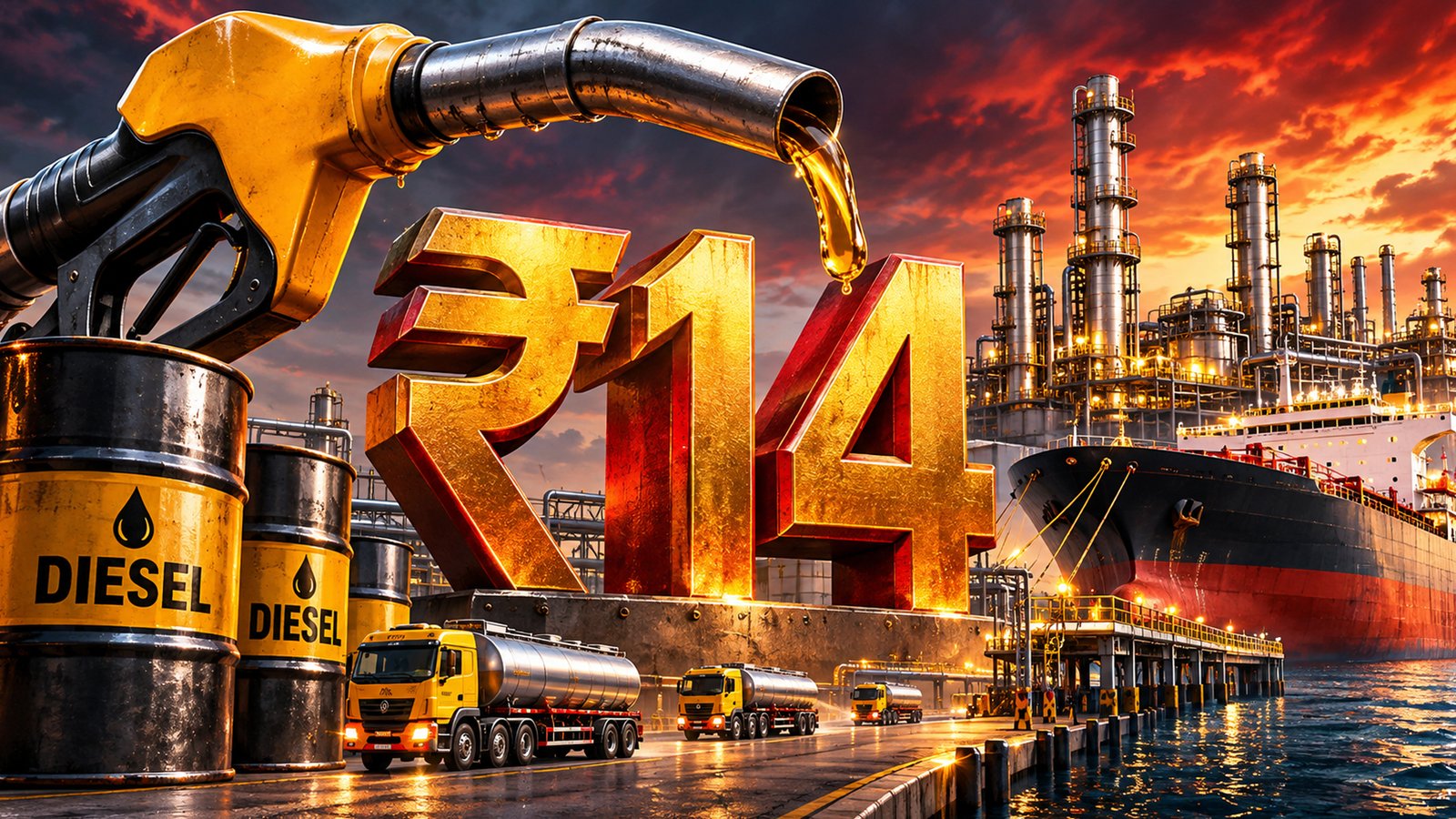
The Centre has tightened the tax regime on petroleum exports, increasing the windfall tax on diesel and aviation turbine fuel (ATF), while continuing to keep petrol exports outside the levy. The revised duties, effective November 16, will increase the cost of shipping diesel and aviation fuel to overseas markets and mark the second hike in export taxes in less than three weeks.
According to notifications issued by the Ministry of Finance on November 16, the special additional excise duty (SAED) on diesel exports has been increased from ₹11.50 per litre to ₹14 per litre. Similarly, the duty on aviation turbine fuel exports has been raised from ₹11 per litre to ₹12.50 per litre. The export duty on petrol, meanwhile, remains zero.
The changes were notified by the Department of Revenue through amendments to the existing export-duty framework. The revised rates came into force immediately after their publication in the Official Gazette.
The latest increase comes close on the heels of the government’s October 31 revision, when it raised the diesel export levy from ₹8.50 to ₹11.50 per litre. The duty on aviation turbine fuel was increased from ₹10.50 to ₹11 per litre during the same revision. At that time, the government also withdrew the ₹2.50 per litre duty on petrol exports, bringing the levy down to zero.
With the latest changes, diesel exporters will now have to pay ₹2.50 more per litre in duty compared with the previous rate. For ATF exporters, the additional burden will be ₹1.50 per litre. Petrol shipments, however, will continue without an export levy.
Government’s focus on domestic fuel availability
The decision is part of the Centre’s efforts to manage petroleum product supplies amid uncertainty in international energy markets. Export duties are periodically adjusted to discourage refiners from prioritising overseas sales when international prices offer better returns than the domestic market.
India introduced export levies on diesel and aviation turbine fuel in March 2026, following escalating tensions in West Asia and a sharp rise in global crude oil prices. The government subsequently introduced a levy on petrol exports in May. Since then, the rates have undergone several changes depending on movements in international fuel prices.
The windfall tax mechanism is intended to ensure that petroleum products remain sufficiently available within the country, particularly during periods of global supply disruptions. When international prices rise, domestic refiners may find overseas markets more attractive because they can earn higher margins by exporting fuel.
Such a situation can create pressure on domestic supplies if refiners divert a larger share of their production towards exports. Higher export duties reduce the financial advantage of selling fuel abroad and help the government maintain a balance between domestic requirements and international trade.
The government reviews the export levies every fortnight. The revisions take into account movements in international crude oil and refined petroleum product prices during the period between reviews. This allows the authorities to respond to changing market conditions rather than maintain a fixed tax rate throughout the year.
No immediate impact on domestic petrol and diesel prices
One important distinction in the latest announcement is that the revised duties apply only to petroleum products exported from India. There has been no corresponding change in the existing excise duty rates on petrol and diesel cleared for domestic consumption.
Therefore, the increase in diesel export duty does not automatically translate into higher diesel prices at fuel stations. Similarly, the revised levy on aviation turbine fuel exports does not amount to an across-the-board increase in the price of jet fuel supplied to domestic airlines.
For oil marketing companies and refiners, however, the higher export duties could influence decisions on the volume of fuel sold overseas and the returns generated from international shipments. The actual financial impact will depend on export quantities, prevailing international prices and individual companies’ refining margins.
Inflation and global energy markets in focus
The latest move also comes at a time when inflationary pressures remain a concern for policymakers. India’s wholesale inflation increased to 12.3% in October, while retail inflation stood at 6.09%, according to figures reported alongside the announcement.
Fuel costs are closely connected to several sectors of the economy, including transportation, aviation, logistics and manufacturing. Diesel remains essential for freight movement and industrial activity, while aviation turbine fuel accounts for a significant share of airline operating expenses.
Changes in international crude oil prices can therefore influence business costs and broader inflation trends. Developments in West Asia have added to uncertainty surrounding energy supplies and petroleum trade, making the management of domestic fuel availability an important policy priority.
The latest revision underlines the Centre’s willingness to use export duties as a tool to respond to changing conditions in the global oil market. With the fortnightly review mechanism continuing, diesel and ATF export levies could be adjusted again depending on international price movements and domestic supply requirements.