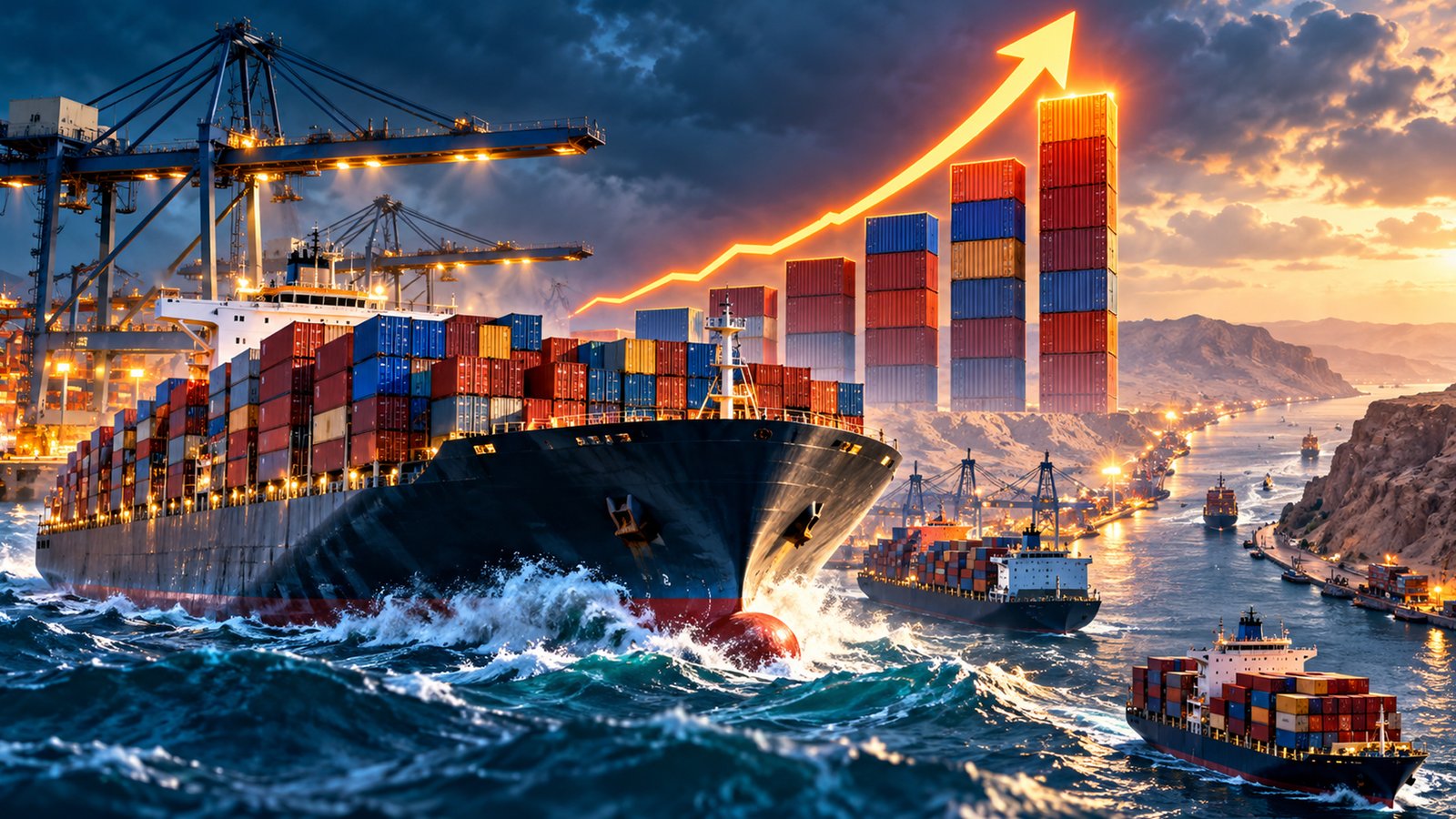
Global container freight rates have surged 130% since February 2026 as renewed tensions in West Asia disrupt shipping routes and increase transportation costs. The sharp rise is creating fresh challenges for businesses involved in international trade, with exporters and importers facing higher logistics expenses. The increase comes even as India’s container-based trade continues to grow, raising concerns about the impact of expensive shipping on businesses and supply chains.
According to a report by brokerage firm Jefferies, global container freight rates climbed from around $2,000-$2,500 in February to approximately $4,000-$4,500 in October. The increase follows a period of easing shipping costs after freight rates surged in 2024 and gradually declined as the balance between demand and available shipping capacity improved.
The latest reversal shows how quickly geopolitical developments can affect global trade. Shipping companies must navigate security risks, possible delays and changing routes, while businesses have to adjust their budgets and delivery schedules to account for higher transportation costs.
Freight rates refer to the charges paid to transport goods by sea. These rates are influenced by cargo demand, vessel availability, fuel prices, port congestion and the distance ships need to travel. When major shipping routes become unsafe or difficult to use, vessels may be diverted, increasing travel time and operating expenses.
West Asia tensions disrupt shipping
The continuing tensions in West Asia have raised uncertainty around important maritime routes connecting Asia, Europe and other major markets. Disruptions around the Red Sea and the wider Middle East have made shipping companies more cautious about routes, schedules and cargo movement.
One key route under watch is the Suez Canal, which connects the Mediterranean Sea with the Red Sea and offers a shorter passage between Asia and Europe. When security concerns make the route difficult to use, shipping lines may divert vessels around the Cape of Good Hope in southern Africa.
Such diversions can add days or weeks to some journeys, increase fuel consumption and delay the return of ships for their next assignments. The result can be tighter vessel availability and higher freight rates across several trade routes.
Jefferies has highlighted the possibility of shipping lines returning to the Suez Canal as an important factor to monitor. A wider return to normal routes could shorten voyages and ease pressure on shipping capacity. However, companies will need to assess the security situation before making such decisions.
Until then, uncertainty over routes and sailing schedules could continue to influence global container shipping prices.
India’s container trade grows 23%
India’s international trade has continued to expand despite the rise in freight costs. According to the Jefferies report, the value of India’s container-based exports and imports increased 23% year-on-year in September 2026.
Exports grew 22%, while imports rose 23%, indicating continued activity across the country’s international trading network.
Exports to the United States recorded a particularly strong increase of 48% year-on-year in September. However, shipments to the United Arab Emirates and Saudi Arabia declined by around 12%-15%, showing that trade performance differed across markets.
The figures suggest that higher shipping costs have not prevented overall container trade from growing. However, if freight rates remain elevated, businesses could face greater pressure on profit margins, particularly when they operate in competitive markets or deal in products with low margins.
Indian exporters may have to absorb some of the additional transportation expenses to retain overseas customers. Importers, meanwhile, could face higher costs for raw materials, machinery, components and finished goods. The final impact will depend on the products being shipped, contractual arrangements and the ability of businesses to pass on higher costs.
Indian port activity shows mixed trends
Cargo movement at Indian ports also recorded varied results in September. Volumes at major ports increased 13% year-on-year, while non-major ports reported a 1% decline, according to the report.
Among non-major ports, cargo volumes at Gujarat ports rose 3%. Maharashtra and Tamil Nadu recorded growth of around 6%-7%. Major and non-major ports along India’s eastern coast, however, experienced a sharp decline in volumes.
The differences underline that port activity depends on several factors, including regional demand, the type of cargo handled, shipping connections and the performance of specific industries. Rising global freight rates are an important concern, but they do not alone explain changes in port volumes.
What higher freight rates mean for businesses
A prolonged increase in shipping costs could affect several parts of the supply chain. Importers may find that goods cost more to bring into India, while exporters could face difficulties maintaining competitive prices in overseas markets.
Companies may respond by negotiating longer-term shipping contracts, planning consignments earlier, reviewing inventory levels and exploring alternative routes where practical. Some may also diversify suppliers to reduce dependence on routes exposed to geopolitical risks.
Higher freight charges can eventually feed into the prices paid by consumers, depending on how much of the additional cost businesses pass on. The extent of the impact will vary across industries and products.
Outlook depends on shipping routes
The direction of global container freight rates will depend on developments in West Asia, vessel availability and the possibility of shipping lines resuming shorter routes. A sustained easing of tensions could help normalise services and reduce transportation costs over time.
A prolonged disruption, however, could keep rates high and create further uncertainty for international trade. Businesses will need to monitor freight charges, delivery schedules and other logistics expenses while planning future shipments.
The 130% rise in global container freight rates highlights the vulnerability of international supply chains to geopolitical developments. India’s trade growth remains encouraging, but businesses may face mounting pressure if shipping costs stay elevated. Greater stability in key maritime routes will be important for keeping trade moving efficiently and controlling logistics expenses.