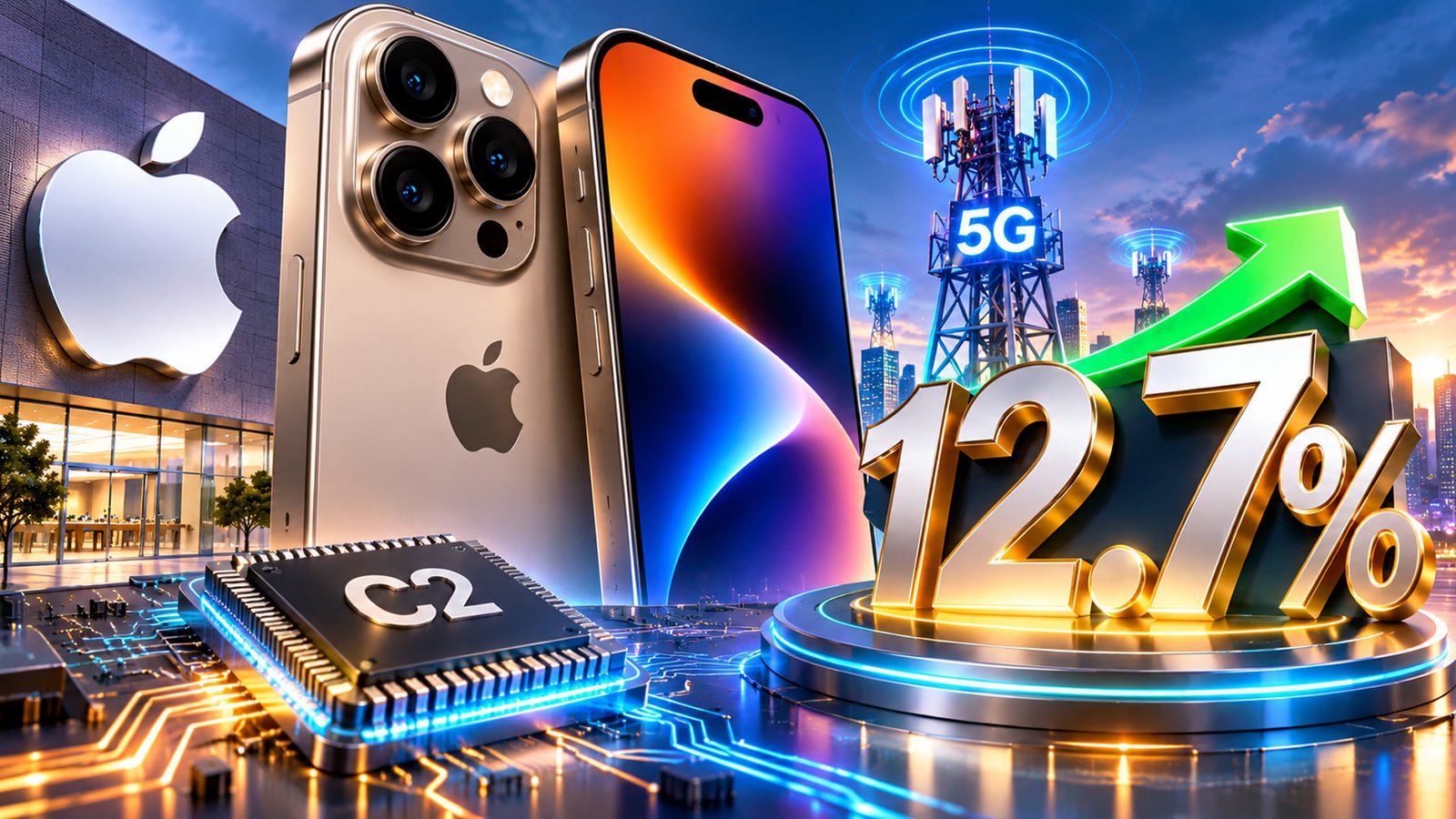
Apple’s iPhone 18 Pro delivers faster 5G download speeds and significantly lower upload delays than its predecessor, the iPhone 17 Pro, according to a new study by Ookla. The latest Speedtest analysis found that the iPhone 18 Pro recorded 12.7% faster median 5G download speeds and 48.9% lower upload latency.
The findings are based on Speedtest data collected between September 18 and November 15, 2026, across 11 markets. These include India, the United States, the United Kingdom, Canada, Australia, Germany, France, Italy, Japan, Saudi Arabia and Taiwan.
The study examined how Apple’s latest smartphones perform under real-world network conditions. It also compared the iPhone 18 Pro with earlier models to assess improvements in mobile connectivity.
Across the 11 markets, the iPhone 18 Pro recorded a median 5G download speed of 167.6 Mbps. Its performance marks a 12.7% improvement over the iPhone 17 Pro after adjusting for differences in testing locations.
Without this adjustment, the improvement would have stood at 17.4%. Ookla made the adjustment because network performance can vary significantly between locations, even within the same city.
The gains were more pronounced among users with slower connections. At the 10th percentile, download speeds improved by 38.2%. This means users who typically experience weaker network performance saw a greater improvement than those with faster connections.
At the 90th percentile, the improvement stood at 8.5%. Median upload speeds also increased by 18.9%, while upload speeds at the 10th percentile improved by 39.3%.
However, the results varied across countries. The United Kingdom recorded the highest median download speed improvement at 21.4%. Canada followed with a 20% increase, while the United States reported a 14.2% gain.
India, Japan, Taiwan and Saudi Arabia did not record a statistically clear improvement in median download speeds over the iPhone 17 Pro. This suggests that the benefits of upgrading may differ depending on local network conditions and mobile operators.
The biggest improvement came in upload latency. The iPhone 18 Pro recorded 48.9% lower median upload loaded latency than the iPhone 17 Pro across the 11 markets.
Upload loaded latency measures the delay a phone experiences while sending data over a busy connection. Lower latency can improve activities such as video calls, online gaming, live streaming and uploading large files.
The improvement ranged from 42% to 53.1% across all 11 markets. Users with slower upload connections experienced even greater gains.
For connections with upload speeds below 5 Mbps, median upload latency fell by 62.1%. For connections above 50 Mbps, it declined by 25.1%. At the 90th percentile, the reduction reached 60.3%.
Ookla also found lower upload latency across LTE, 5G standalone and 5G non-standalone networks. The improvement extended to Wi-Fi connections in Germany, the UK and the US, where latency fell between 17.9% and 25.5%.
The iPhone 18 Pro and iPhone 18 Pro Max use Apple’s C2 modem. The company also uses the modem in its first foldable smartphone, the iPhone Duo. However, the US version of the iPhone 18 Pro Max uses Qualcomm’s Snapdragon X80 modem.
The findings have drawn attention to Apple’s efforts to improve its in-house modem technology. However, Ookla has not established that the C2 modem alone accounts for the performance gains. Modem technology, other hardware components, software optimisation and mobile operator policies could all influence the results.
The study also found that the iPhone Duo recorded 10.8% faster median 5G download speeds than the iPhone 18 Pro across the 11 markets. Its advantage was statistically clear in the UK, Canada, Australia and Taiwan.
The iPhone 18 Pro Max also recorded 6.9% faster median download speeds than the standard Pro model outside the US. Both devices use Apple’s C2 modem in these markets.
The report also highlights the large number of Indian consumers who continue to use older iPhones. Around 58% of iPhone users in India still use models from the iPhone 15 generation or earlier.
This creates considerable room for upgrades as Apple expands its latest smartphone range. Ookla found that moving from an iPhone 14 Pro to an iPhone 18 Pro could improve median download speeds by 23.2% across the markets studied. The improvement reaches 59.3% among users at the 10th percentile.
The findings indicate that Apple’s latest devices offer meaningful improvements in mobile connectivity, particularly in upload performance. However, Indian consumers may not experience the same download speed gains seen in markets such as the UK and Canada.
Actual performance will depend on network coverage, operator capabilities, location and usage conditions. Ookla also cautioned that early adopters may use their phones in areas with better network coverage. The results could change as more users adopt the devices.
Ookla’s latest study finds the iPhone 18 Pro offers 12.7% faster 5G downloads and 48.9% lower upload latency than the iPhone 17 Pro.