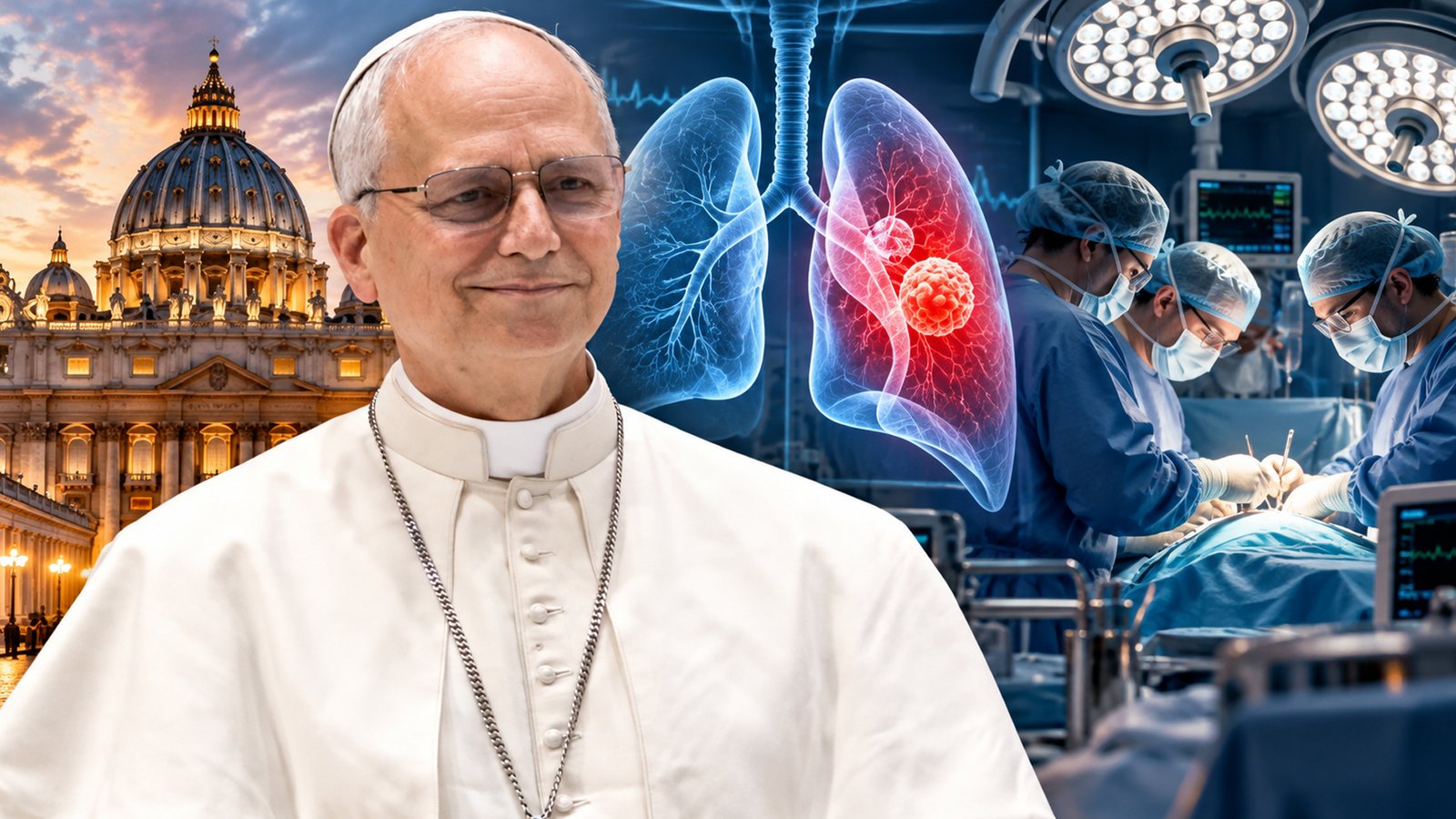
Pope Leo XIV is recovering in hospital after undergoing successful surgery to remove part of his right lung, with the Vatican reporting that he spent a calm night following the operation. The 71-year-old pontiff was diagnosed with lung adenocarcinoma, a type of lung cancer, after doctors examined the tissue removed during the procedure on Tuesday, October 13.
The surgery took place at Rome’s Agostino Gemelli Hospital. According to the Vatican, the operation was completed successfully without complications. The Pope regained consciousness normally and returned to his hospital room after a period of observation.
The latest health update, released on Wednesday morning, October 14, said the Pope had spent a peaceful night. Further information on his condition was expected later in the day.
The development has drawn attention from Catholics and people around the world, with many expressing concern and offering prayers for his recovery. The Vatican has not yet provided a detailed prognosis, and the next stage of treatment will depend on further medical assessments.
Surgery confirms lung cancer diagnosis
Pope Leo had announced on Sunday that doctors had found a small, localised nodule in his lung during recent medical examinations. He said the growth had been detected at an early stage and that doctors had recommended surgery to remove it.
The procedure was scheduled for the beginning of the week and went ahead as planned on Tuesday. The Pope was admitted to Gemelli Hospital, where a team led by thoracic surgeon Professor Stefano Margaritora carried out the operation.
The surgery itself lasted approximately 90 minutes, although the Pope spent around three hours in the operating theatre. Doctors removed the lower lobe of his right lung using a video-assisted surgical technique.
A tissue examination during the operation confirmed the suspected diagnosis of pulmonary adenocarcinoma. The Vatican subsequently identified the condition as lung cancer.
The medical team described the surgery as successful, with no complications reported. The Pope woke up normally and was transferred back to his room after a brief period of observation.
The Vatican has not disclosed the tumour’s exact size or confirmed whether the cancer had spread to nearby lymph nodes or other parts of the body. Further examination of the removed tissue is expected to provide doctors with more information about the disease and help determine the appropriate follow-up care.
What the diagnosis means
Lung adenocarcinoma is a common form of non-small-cell lung cancer. It develops in cells that line the lungs and can occur in smokers as well as people who have never smoked.
The treatment and outlook depend on several factors, including the tumour’s size, its location, whether cancer cells have spread and the patient’s overall health. Surgery is often considered when a tumour is localised and doctors believe it can be removed.
Removing the affected lobe of a lung, a procedure known as a lobectomy, is an established treatment for certain cases of lung cancer. However, the operation alone does not provide enough information to determine an individual patient’s long-term prognosis.
Doctors will need to assess the surgical findings and any additional test results before deciding whether further treatment is necessary. The Vatican has not announced a definitive plan for chemotherapy, radiation or other therapies.
Medical experts have noted that early detection can improve treatment prospects, but the absence of detailed staging information means it would be premature to draw conclusions about the Pope’s recovery outlook.
At 71, Pope Leo’s age is one consideration in his recovery, alongside his overall physical condition and how he responds to surgery. His medical team will monitor his breathing, mobility and general progress during the hospital stay.
Public engagements cancelled during recovery
The Vatican has said the Pope is expected to remain in hospital for approximately a week. His public engagements have been cancelled through October 20 to allow him time to recover.
The decision temporarily removes the pontiff from his usual public schedule, including appearances and meetings that form part of his responsibilities as head of the Catholic Church. The Vatican has not announced any change in the administration of the Church during his hospitalisation.
Attention is also turning to his planned trip to South America in November. The visit is expected to include Uruguay, Argentina and Peru, but his ability to undertake the journey will depend on his recovery and medical advice. No final decision on the trip has been announced in the latest update.
The Pope, born Robert Francis Prevost in Chicago, was elected in May 2025. Before becoming pontiff, he spent many years working as a missionary and church leader, including in Peru. His lung surgery is a significant health development during his papacy.
Prayers and support from around the world
News of the Pope’s diagnosis has prompted messages of support from religious communities and public figures. Catholics have gathered in prayer as he recovers, while the Vatican has continued to issue updates through its press office.
The Pope had spoken publicly about the lung nodule before his admission to hospital, explaining that doctors had recommended surgery. His openness about the medical procedure has brought unusual attention to the health of the head of the Catholic Church.
For now, the immediate priority is a stable recovery after surgery. The calm night reported by the Vatican is an encouraging early update, although it does not by itself establish the longer-term outlook.
Further medical examinations will help determine whether the cancer was confined to the removed tissue and whether additional treatment is needed. Until those findings are available, the Vatican has offered no detailed assessment of the Pope’s prognosis.
The coming days are expected to bring closer monitoring of his recovery and further updates on his health. His return to public duties, as well as the planned South American visit, will depend on how he progresses in hospital and the advice of his medical team.