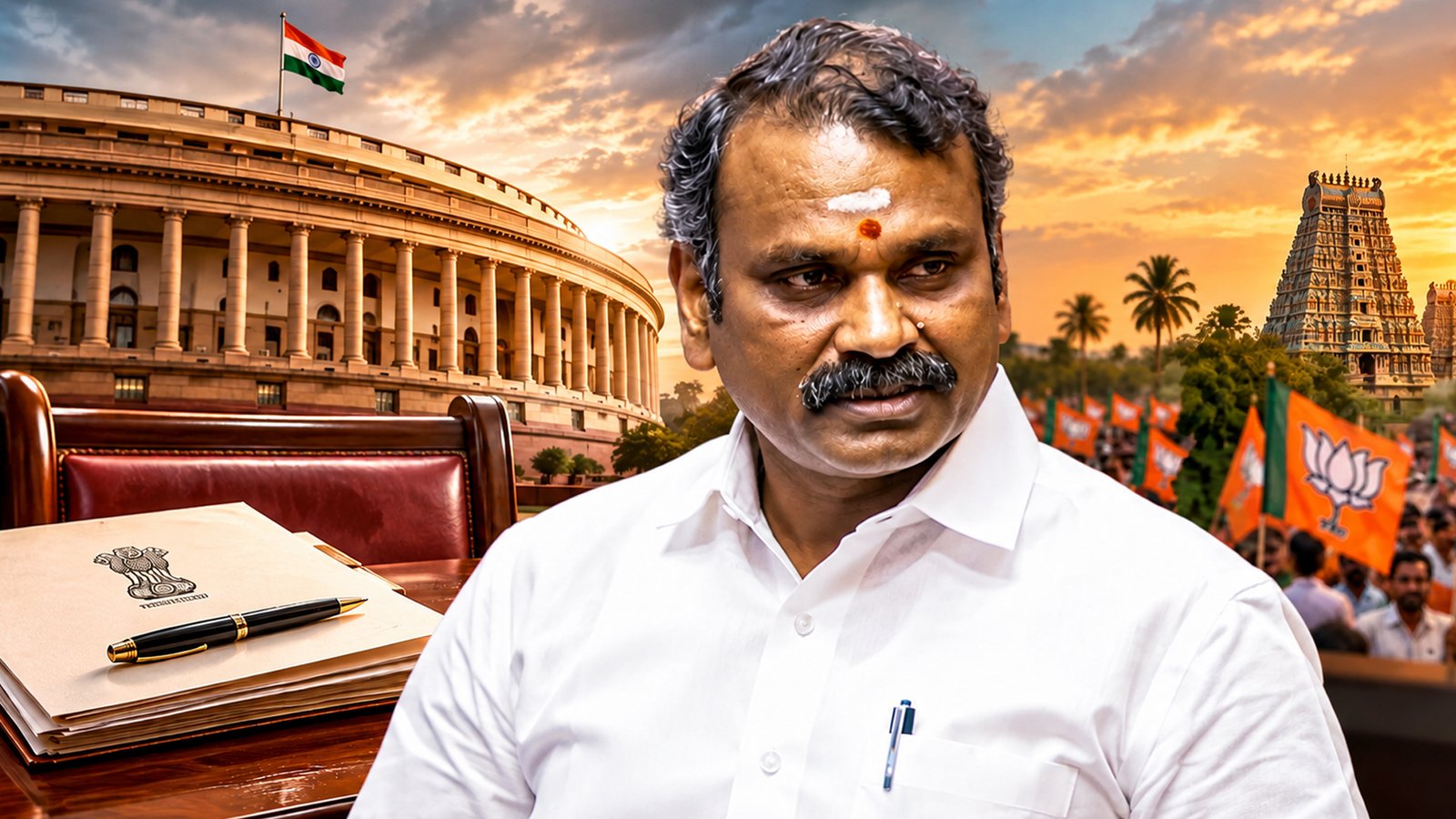
L. Murugan has resigned as Union Minister of State, saying he wants to return to Tamil Nadu and work towards strengthening the Bharatiya Janata Party (BJP) at the grassroots level. His decision marks a shift from his responsibilities in the Union government to the party’s organisational work in a state where the BJP is seeking to expand its political presence.
Murugan has also stepped down from his Rajya Sabha membership, according to reports published on October 14. He is understood to have communicated his decision to Prime Minister Narendra Modi and expressed his desire to focus on building the party in Tamil Nadu.
The resignation comes at a time when political parties are working to strengthen their organisational networks and prepare for upcoming electoral challenges. For the BJP, expanding its reach across Tamil Nadu remains an important political objective, given the state’s established Dravidian political traditions and the dominance of regional parties.
Murugan’s return is expected to give the party an experienced leader with knowledge of both its state-level organisation and the functioning of the Union government.
From Union ministry to grassroots politics
vserved as Minister of State in the Union government, handling responsibilities that included Information and Broadcasting and Parliamentary Affairs. He was also associated with the Ministry of Fisheries, Animal Husbandry and Dairying during his tenure.
A prominent BJP leader from Tamil Nadu, Murugan previously served as the party’s state president. During that period, he worked to strengthen the BJP’s organisational presence and increase its visibility in a political landscape largely shaped by the Dravida Munnetra Kazhagam (DMK) and the All India Anna Dravida Munnetra Kazhagam (AIADMK).
His political experience includes work at the organisational level, campaigning and efforts to expand the party’s support base. His decision to return to Tamil Nadu suggests that the BJP intends to draw on this experience as it seeks to connect more closely with voters and party workers across the state.
Grassroots organisation remains an important part of electoral politics. Local leaders, booth-level networks, public outreach and sustained engagement with communities can help parties build support beyond major campaigns. Murugan’s stated intention is to concentrate on this work rather than continue in his ministerial role.
BJP’s challenge in Tamil Nadu
Tamil Nadu has traditionally been dominated by the DMK and AIADMK, with regional identity, language, social justice and welfare politics playing significant roles in elections. The BJP has attempted to increase its influence in the state through organisational expansion, alliances and campaigns focused on national and regional issues.
However, translating national political strength into electoral gains in Tamil Nadu has remained a challenge. The party has sought to establish a broader presence beyond its traditional support base, while competing with established regional organisations that have deep roots among voters.
Murugan’s return could provide an opportunity for the BJP to strengthen its network at the local level. His experience as a former state president may be useful in coordinating party workers, building local leadership and improving communication between the state unit and the national leadership.
The task will involve more than high-profile political events. Sustained engagement with voters, identifying local concerns and developing a strong organisational structure are likely to be central to the party’s efforts.
A shift in political priorities
Resigning from both the Union ministry and the Rajya Sabha represents a significant change in Murugan’s political responsibilities. His decision indicates a preference for direct organisational work in Tamil Nadu at a time when the BJP is seeking to consolidate its position in the state.
The move also places greater emphasis on the party’s state-level strategy. National leadership and central government representation can provide visibility, but a stronger local organisation is essential for maintaining contact with voters between elections.
Murugan’s experience in the Union government could also help him connect state-level priorities with the BJP’s national political agenda. Whether this translates into a measurable expansion of the party’s support will depend on its organisational decisions, alliances and ability to address local political concerns.
For now, the immediate significance of his resignation lies in his stated intention to return to Tamil Nadu and focus on strengthening the BJP from the grassroots. His next role within the party’s state organisation and the responsibilities he may take up are likely to become clearer as the BJP outlines its plans for the state.
The development signals a renewed focus on Tamil Nadu for Murugan and the BJP, with the party looking to build a stronger presence in one of India’s most politically competitive states.