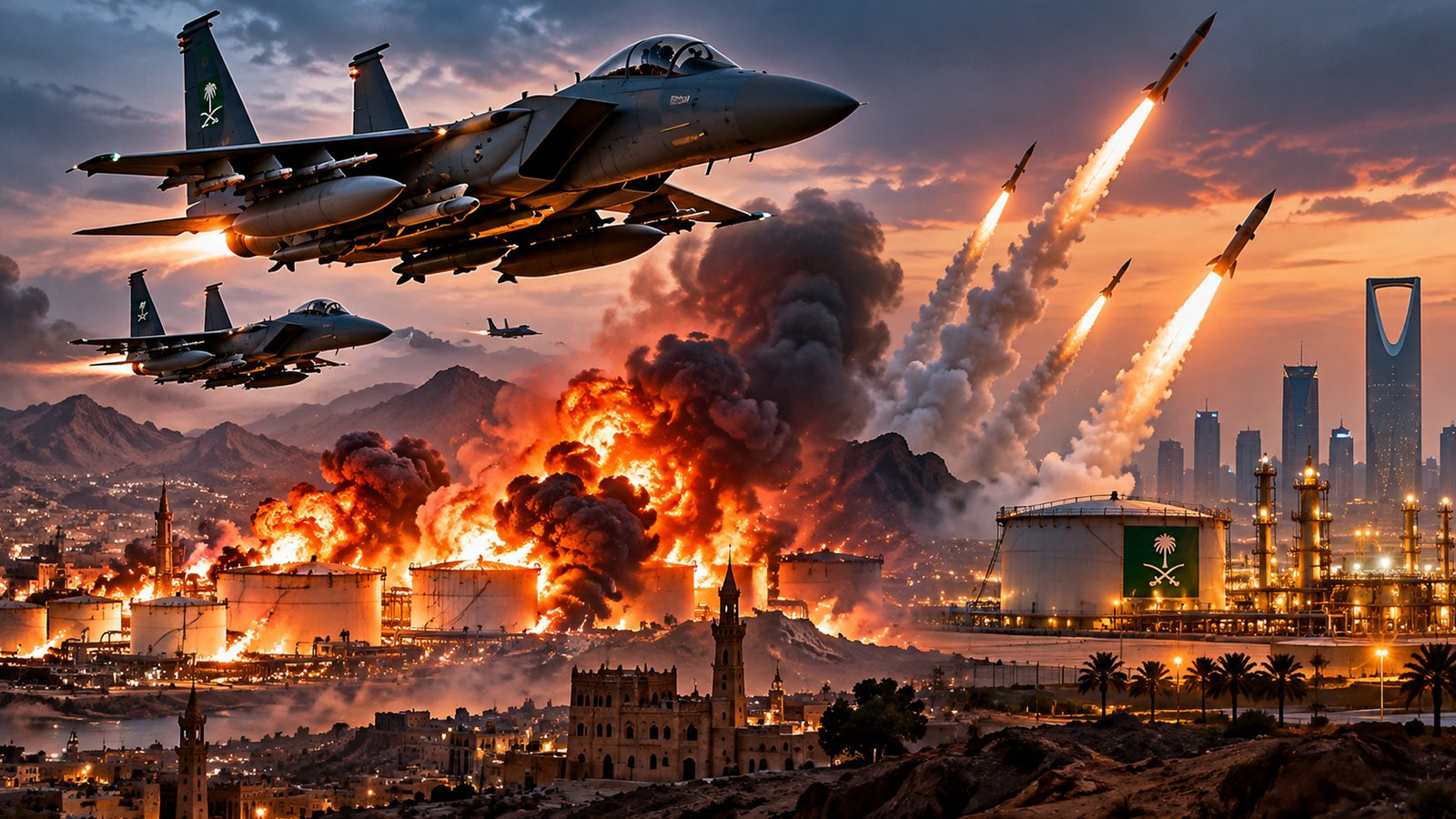
The conflict between Saudi Arabia and Yemen’s Houthi rebels has intensified after Saudi-led coalition forces launched airstrikes near Sanaa, Yemen’s capital, targeting an oil facility, according to Houthi-linked media reports. The strikes came amid a growing cycle of missile and drone attacks on Saudi infrastructure, raising concerns about the security of energy facilities and the risk of a wider regional conflict.
The reported airstrikes took place on Tuesday, October 13, shortly after the Saudi-led coalition issued an evacuation warning for civilians near the Yemen Petroleum Company’s Al-Sabah central station on the western outskirts of Sanaa. Residents reported hearing explosions, while Al Masirah, a broadcaster affiliated with the Houthis, reported that the facility had been struck.
The precise extent of the damage was not immediately clear. The coalition had warned residents to leave the area ahead of a planned military operation, but initial reports did not establish independently which structures had been hit.
The vfollows a series of Houthi missile and drone attacks against Saudi targets, including airports and energy infrastructure. The latest exchanges have heightened security concerns in the kingdom and added to uncertainty across a region already facing significant geopolitical tensions.
Oil facilities become targets
The Al-Sabah station is part of Yemen’s petroleum infrastructure. Ahead of the reported strike, Yemen Petroleum Company officials said the storage facilities were empty, arguing that an attack would not affect the country’s oil reserves or supplies to residents.
The evacuation warning nevertheless triggered concern among people in Sanaa. Witnesses reported hearing explosions, while some motorists reportedly queued at petrol stations amid fears that the fighting could disrupt fuel supplies.
Saudi-led coalition spokesman Major General Turki al-Maliki said the facility and its underground fuel depots were being used by the Houthis to support their military capabilities, including missile and drone operations. The claim underscores the coalition’s position that energy-related sites are linked to the rebels’ military infrastructure.
The strikes form part of a broader campaign against Houthi-controlled facilities. Reports also described attacks on oil storage infrastructure around Ras Isa port and in Hodeidah province. These locations are important to Yemen’s fuel network, making any damage or disruption potentially significant for civilians already struggling with shortages and high prices.
Houthis threaten Saudi energy infrastructure
The Houthis responded to the evacuation warning by threatening retaliation against Saudi Arabia. The group’s military spokesman, Yahya Saree, warned that Saudi oil installations and other strategic sites could be targeted if coalition forces attacked Sanaa.
The warnings followed earlier Houthi attacks on Saudi infrastructure, including King Khalid International Airport in Riyadh and facilities linked to Saudi Aramco, the kingdom’s state-owned oil company.
A reported Houthi strike on an administrative building at Aramco’s headquarters in Dhahran caused a limited fire, according to Saudi authorities. No injuries or fatalities were reported in that incident.
Saudi air defences have also intercepted missiles launched towards the kingdom. Saudi reports said debris from intercepted missiles damaged homes and injured residents, highlighting the risks to civilians even when incoming weapons are destroyed before reaching their intended targets.
The tit-for-tat attacks have widened the range of potential targets on both sides. Oil depots, refineries, airports and other critical infrastructure are increasingly exposed as the conflict moves beyond conventional military positions.
A conflict with wider regional implications
The latest fighting marks a further deterioration in the security situation surrounding Yemen’s long-running civil war. The Houthis, who control Sanaa and substantial parts of northern Yemen, have fought forces backed by Saudi Arabia for years. A truce that began in 2022 reduced major cross-border hostilities for a period, but renewed fighting has weakened hopes of a lasting settlement.
Saudi Arabia has supported Yemen’s internationally recognised government against the Houthis. The rebels, who are aligned with Iran, have increasingly used missiles and drones to strike targets beyond Yemen, giving the conflict a wider regional dimension.
The renewed attacks also raise concerns about energy security. Saudi Arabia is one of the world’s leading oil producers, and threats to its facilities can affect market sentiment even when there is no immediate loss of production. Continued strikes could also increase security costs and complicate the movement of oil and other goods through the region.
Yemen faces a separate humanitarian burden. Years of conflict have damaged infrastructure, displaced families and restricted access to essential supplies. Any disruption to fuel storage and distribution could make transport, electricity generation and the delivery of food and medical assistance more difficult.
The immediate impact of the reported Sanaa strike remains uncertain, including the extent of damage to the oil facility. However, the exchange of attacks and threats points to a dangerous cycle in which each side risks prompting further retaliation.