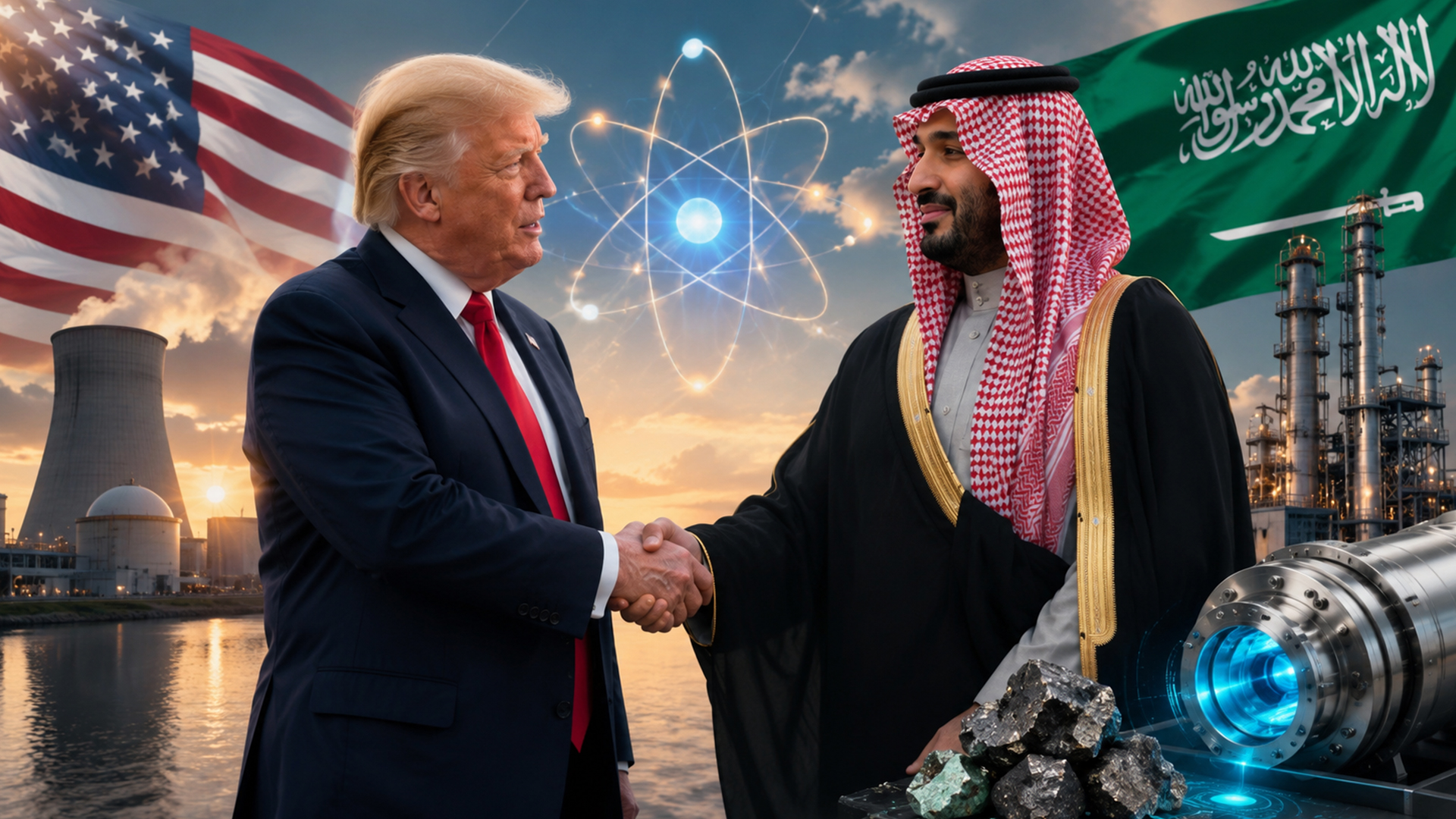
US President Donald Trump has approved a landmark civil nuclear cooperation agreement with Saudi Arabia, marking a major shift in Washington’s policy towards the Gulf kingdom. The proposed agreement, if finalised, would allow Saudi Arabia to enrich uranium on its own soil under international safeguards, a long-standing demand from Riyadh that previous US administrations had refused to accept.
The decision is being viewed as a significant diplomatic breakthrough for Saudi Arabia and a strategic move by the Trump administration to deepen ties with one of America’s closest Middle East partners. At the same time, it has triggered fresh concerns among nuclear non-proliferation experts, who warn that domestic uranium enrichment could increase the risk of a regional nuclear arms race.
The agreement is expected to be based on the US Atomic Energy Act’s Section 123 framework, which governs peaceful nuclear cooperation between the United States and foreign countries. Such agreements are designed to support civilian nuclear energy programmes while requiring compliance with international safety and monitoring standards.
Unlike previous negotiations, the new framework reportedly does not require Saudi Arabia to permanently give up uranium enrichment or spent fuel reprocessing. Instead, Riyadh would be allowed to enrich uranium for civilian purposes under the supervision of the International Atomic Energy Agency (IAEA) and in accordance with safeguards aimed at preventing the diversion of nuclear material for military use.
Saudi Arabia has argued for years that it needs a comprehensive civil nuclear energy programme to diversify its economy, reduce dependence on oil and meet rapidly growing electricity demand. Nuclear power also forms part of Crown Prince Mohammed bin Salman’s Vision 2030 strategy, which aims to transform the kingdom into a diversified and technology-driven economy.
Saudi officials have consistently maintained that the programme is intended solely for peaceful purposes. However, the kingdom has also stated in the past that if regional rival Iran were to acquire a nuclear weapon, Saudi Arabia would seek similar capabilities, a position that has heightened international concern.
For the Trump administration, the agreement represents both an economic and geopolitical opportunity. It could open the door for American companies to participate in building Saudi nuclear reactors, creating significant commercial opportunities while strengthening US influence in a region where China and Russia have been expanding their presence.
The agreement is also expected to reinforce the long-standing US-Saudi strategic partnership at a time of growing competition for influence in the Middle East. Washington views closer cooperation with Riyadh as an important element of its broader regional strategy involving energy security, investment and defence cooperation.
However, the proposal is likely to face close scrutiny in the US Congress. Lawmakers from both political parties have previously expressed concerns over allowing uranium enrichment in countries without strict restrictions, arguing that such technology could potentially be adapted for weapons production, even if currently intended for peaceful use.
Nuclear experts note that uranium enrichment is a sensitive technology because the same facilities used to produce low-enriched uranium for nuclear power plants can, if further processed, produce highly enriched uranium suitable for nuclear weapons. While international inspections help reduce these risks, critics argue that expanding enrichment capabilities in the Middle East could encourage neighbouring countries to pursue similar programmes.
The agreement also comes against the backdrop of continuing tensions surrounding Iran’s nuclear programme. Many analysts believe Washington hopes that strengthening ties with Saudi Arabia will help maintain a regional balance while reinforcing strategic partnerships with key allies.
Supporters of the deal argue that bringing Saudi Arabia’s nuclear programme under a formal US-led framework with IAEA oversight is safer than leaving the kingdom to seek assistance from other countries with fewer safeguards. They believe the arrangement could ensure greater transparency and strengthen international monitoring.
The next steps include detailed negotiations on the legal framework, technical safeguards and congressional review before the agreement can come into force. Both governments are expected to continue discussions on implementation, commercial partnerships and regulatory oversight.
If completed, the US-Saudi nuclear agreement would become one of the most consequential civil nuclear cooperation deals in recent years. Beyond energy, it has implications for Middle East geopolitics, nuclear non-proliferation, uranium enrichment, US foreign policy, and the future of regional security. As global powers compete for influence in the Gulf, the agreement is likely to shape diplomatic and strategic relations across the region for years to come.
Also Read: Vijay seeks complete NEET scrapping