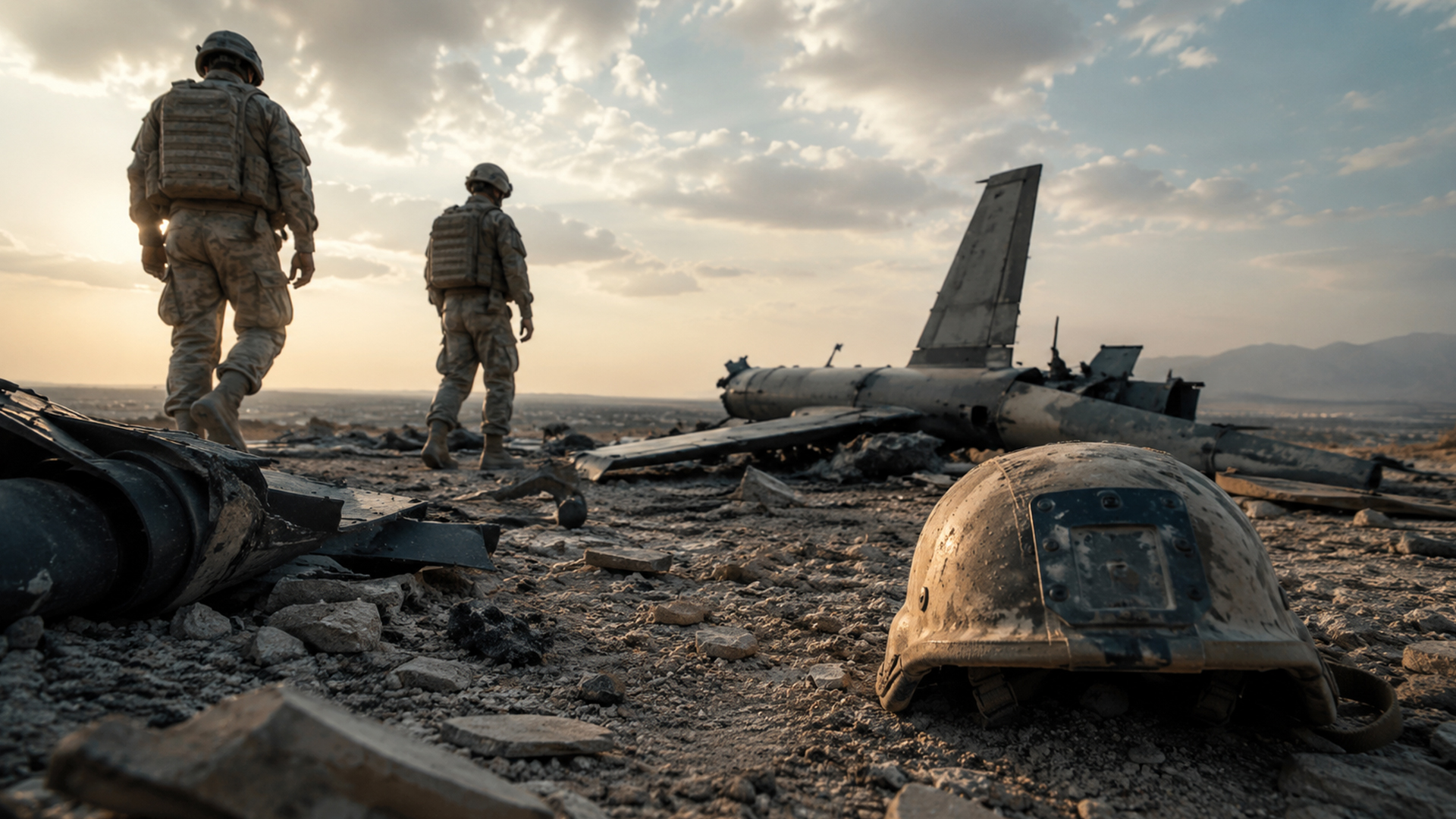
A US soldier has died in Iraq after a controlled detonation of a captured Iranian drone went tragically wrong, marking another loss for the American military amid heightened tensions in the Middle East. The incident occurred at Ain al-Asad Air Base in western Iraq, where US forces have been handling weapons and equipment recovered during recent military operations.
According to the US military, the soldier was part of an explosive ordnance disposal (EOD) team tasked with safely destroying an Iranian-made drone that had been recovered following the recent conflict involving the United States and Iran. During the planned controlled explosion, an unexpected detonation occurred, fatally injuring the soldier. Another service member was also wounded in the blast and is currently receiving medical treatment. Military officials said the injured soldier is in stable condition.
The identity of the deceased soldier has not yet been released, as authorities are waiting to notify the family. The US Department of Defense said an investigation has been launched to determine exactly what caused the explosion and whether there were any technical or procedural failures during the disposal operation.
The fatal accident comes just weeks after the United States carried out airstrikes on Iranian nuclear facilities during a brief but intense conflict that sharply increased tensions across the region. Although a ceasefire has since reduced direct military confrontations, American troops remain deployed across Iraq and Syria, where they continue to face security threats from armed groups and unexploded military equipment.
Military officials explained that explosive ordnance disposal teams regularly deal with dangerous weapons, including missiles, drones, bombs and improvised explosive devices. These operations are among the most hazardous duties performed by military personnel because even controlled detonations can become unpredictable if explosives have been damaged or modified.
The drone involved in the incident is believed to have been one of several Iranian unmanned aerial vehicles recovered after recent military operations. Such drones are often examined for intelligence before being destroyed to prevent them from falling into the wrong hands or posing future security risks.
The accident highlights the risks faced by American troops even after active combat operations have ended. While headlines often focus on battlefield casualties, military personnel also face life-threatening dangers during bomb disposal missions, equipment recovery operations and the handling of captured enemy weapons.
US military officials paid tribute to the fallen soldier, describing the service member as someone who served with courage and professionalism in one of the military’s most demanding roles. They also expressed support for the soldier’s family and fellow personnel affected by the tragedy.
The incident has once again drawn attention to the continued American military presence in Iraq. Although combat operations against the Islamic State group have largely ended, thousands of US troops remain in the country to support Iraqi security forces, conduct counterterrorism operations and help maintain regional stability. Their mission also includes securing military installations and safely disposing of unexploded ordnance and captured weapons.
Security analysts note that unexploded drones and advanced military equipment present unique challenges because they may contain sophisticated explosive systems, hidden triggers or damaged components that increase the risk of accidental detonation. Even highly trained bomb disposal specialists operate under strict safety protocols, but the work carries unavoidable risks.
The death is likely to renew discussions about the safety of explosive ordnance disposal missions and the need for advanced technologies, including robotic systems, to reduce the exposure of personnel to dangerous explosives. Modern militaries increasingly rely on remotely operated equipment for bomb disposal, but certain situations still require soldiers to work close to hazardous devices.
The US military has not disclosed additional technical details about the drone or the exact circumstances surrounding the explosion, citing the ongoing investigation. Officials said more information will be released once inquiries are completed and the soldier’s next of kin have been fully informed.
The tragedy serves as a reminder that military service often involves significant risks beyond the battlefield. Even after hostilities subside, the work of clearing dangerous weapons, securing military bases and protecting fellow service members continues under challenging and unpredictable conditions.
As investigations continue, tributes are expected from military leaders and colleagues honouring the soldier’s sacrifice. The incident also underscores the lasting dangers posed by modern warfare, where explosive devices and unmanned aerial systems can remain deadly long after combat operations have ended.
Also Read: Apple hikes subscription prices in India