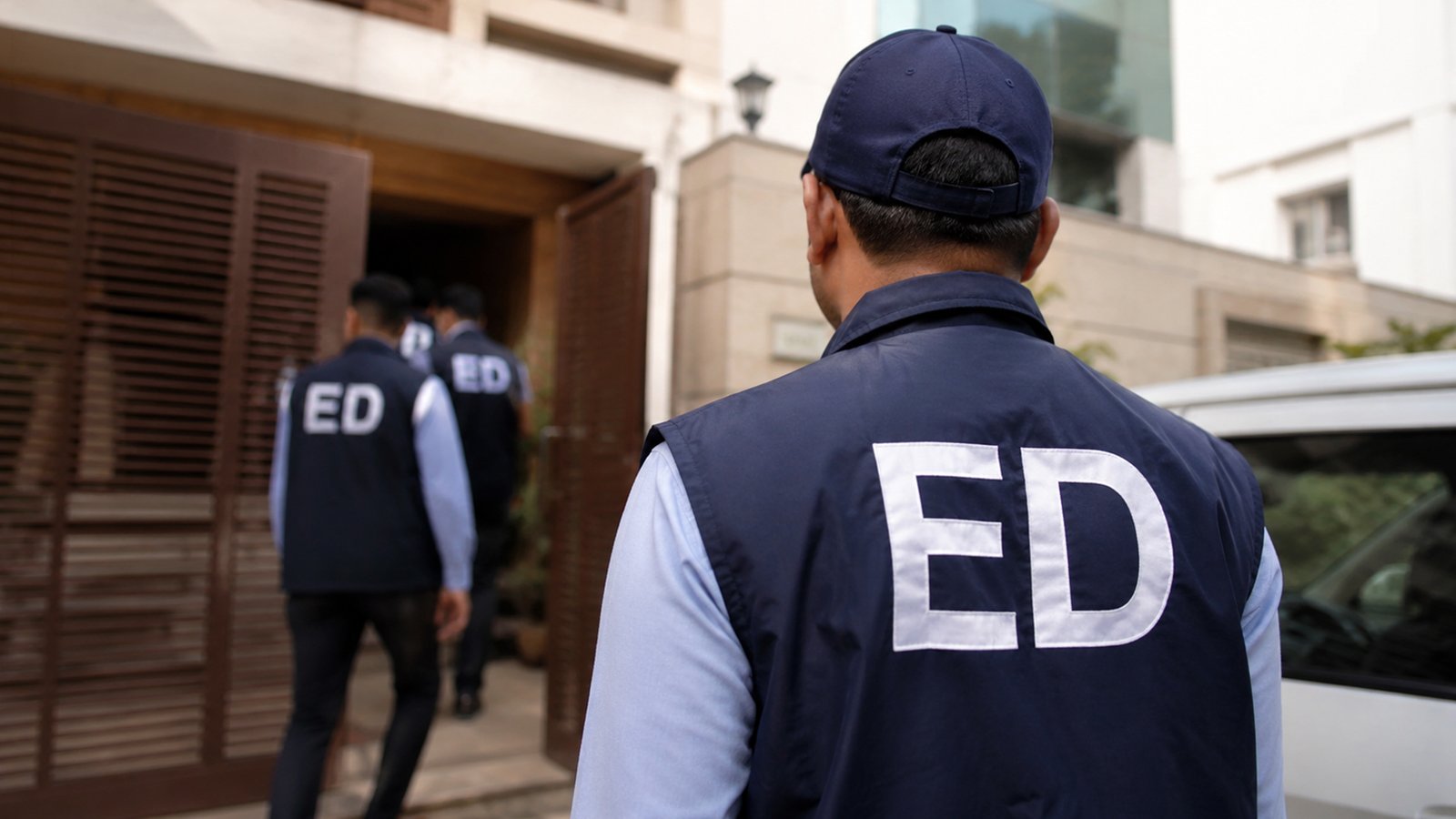
The Enforcement Directorate (ED) on Wednesday conducted searches at around 10 locations linked to jailed Samajwadi Party leader Azam Khan, his Maulana Mohammad Ali Jauhar Trust and Mohammad Ali Jauhar University as part of a money laundering investigation. The searches were carried out across Rampur and Saharanpur in Uttar Pradesh and Delhi, with investigators examining financial records and other material connected to the case.
The ED action began early in the morning and included the Mohammad Ali Jauhar University campus in Rampur and premises associated with the trust. The searches are being carried out under the Prevention of Money Laundering Act (PMLA), as the agency seeks to establish the alleged flow of funds and determine how they were ultimately used.
At the centre of the investigation is an alleged diversion of government contract funds through private contractors. According to officials, the ED is examining transactions involving contractors who are suspected of having received government contracts and subsequently transferring money to the trust or the university.
Investigators are looking into whether such transfers were shown as donations or payments connected with construction activity. The agency is also examining whether the alleged funds were subsequently used to create or finance assets linked to the Jauhar University and the trust.
The searches are intended to help investigators trace the alleged proceeds of crime and establish the financial trail. Officials are examining documents, financial records and digital evidence that could shed light on the transactions under scrutiny.
As the searches were continuing, the ED had not publicly disclosed details of any seizures or specific findings from the premises. The investigation remains at the stage of gathering evidence, and the allegations being examined by the agency have not been established as guilt.
The latest ED searches add to the mounting legal and administrative pressure surrounding Azam Khan and the university, which he founded in Rampur in 2006. The case is among the latest national developments involving politics and law enforcement in India. Mohammad Ali Jauhar University has for years remained closely associated with Khan and his political career, while also becoming the focus of disputes involving land, construction and finances.
The university is currently facing a separate dispute over the legality of its campus buildings. The Rampur Development Authority had raised objections to 38 of the university’s 40 buildings, alleging that they were constructed without the required approvals. A demolition order followed, but the proposed action was later stayed temporarily by the divisional commissioner pending further proceedings.
The demolition issue has added a political dimension to the controversy. The Samajwadi Party has opposed the proposed action, while Azam Khan’s wife, Tazeen Fatma, has appealed to the Uttar Pradesh government to reconsider the decision, stressing that the interests of students and the wider public should be protected.
The university has also become a focal point for students, alumni and supporters who have raised concerns about the impact of any action against the campus. The dispute has therefore moved beyond questions surrounding the institution’s buildings and into a wider political and public debate.
For Azam Khan, the ED investigation comes amid continuing legal troubles. Khan and his son Abdullah Azam are currently lodged in Rampur jail. The fresh money laundering probe puts the financial affairs of the Jauhar Trust and the university under renewed scrutiny and could lead to further investigation if the agency finds evidence supporting the allegations.
The ED’s focus, however, is specifically on following the alleged money trail. Investigators are expected to examine how government contract payments moved through private contractors, whether money subsequently reached entities associated with the trust or university, and whether those funds were used for construction or other assets.
The searches across three locations — Rampur, Saharanpur and Delhi — indicate that investigators are examining transactions and individuals beyond the university campus itself. The outcome of the searches, including any documents or electronic evidence recovered, is likely to determine the next steps in the money laundering investigation.
.