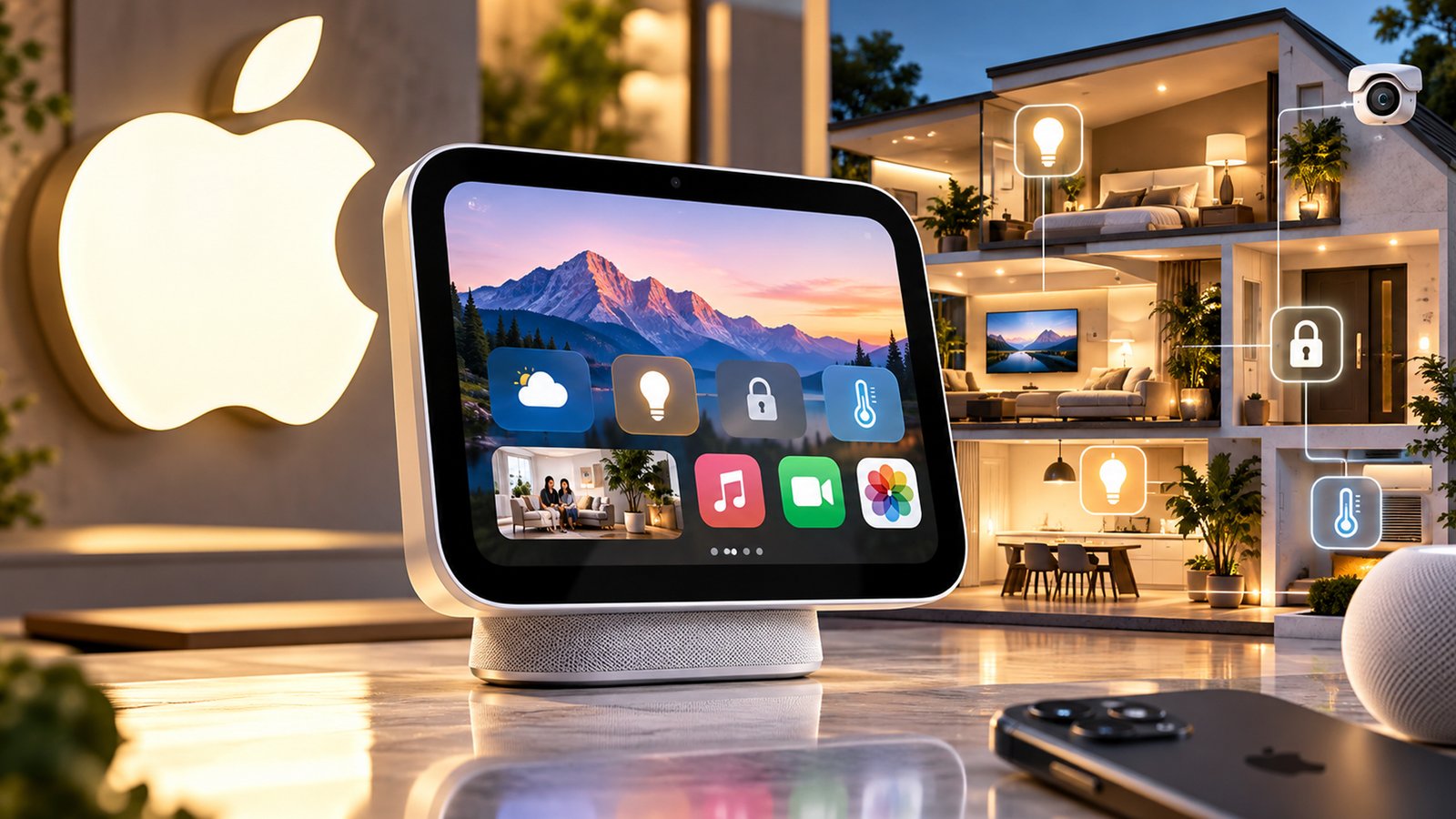
Apple has entered a new phase of its smart home strategy with HomeView, a connected display designed to bring home automation, entertainment and personalised digital assistance into one device. Priced at ₹39,900 in India, the new product combines a touchscreen, Apple’s Siri AI assistant and controls for compatible smart home accessories.
The launch marks Apple’s effort to make its ecosystem more useful beyond smartphones, computers and wearable devices. HomeView is designed to serve as a shared household screen where users can manage everyday tasks, make video calls, listen to music, view photos and control connected appliances.
Pre-orders for Apple HomeView opened on October 13, with sales scheduled to begin on November 13. The device is available in four colours: silver, starlight, rose pink and space grey. Apple is offering both a tabletop model and a wall-mounted version, allowing users to choose an arrangement that suits their homes.
The product is aimed at consumers looking for a central point to manage connected devices without relying entirely on a smartphone. It also places Apple in more direct competition with smart displays and home hubs offered by Amazon and Google.
Display, design and everyday use
HomeView features a 7-inch Liquid Retina display with a design intended to fit into kitchens, living rooms, hallways and other shared spaces. The screen can display photographs, calendars, weather updates and other information, making it useful even when users are not actively interacting with it.
The tabletop version has an adjustable stand, while the wall-mounted model is designed for fixed installation. The wall-mounted version requires a compatible mounting and power solution, which may need to be purchased separately.
Beyond its display, the device includes an Apple-engineered audio system designed to deliver room-filling sound for music, podcasts and videos. Users can also make FaceTime calls through the built-in camera, which uses Center Stage technology to keep them in the frame as they move.
These features allow HomeView to function as more than a conventional smart speaker. It combines communication, entertainment and household information in a single device that can remain accessible to multiple family members.
Siri AI brings personalised assistance
A major feature of HomeView is Siri AI, Apple’s upgraded voice assistant designed to make everyday interactions more natural and useful. Users can ask questions, manage reminders, access calendar information, play music and control supported smart home devices through voice commands.
The device can recognise up to six members of a household and provide a personalised experience for each person. When HomeView recognises a user, it can display relevant personal information, including messages and calendar entries, provided the person’s compatible iPhone or iPad meets Apple’s connection and software requirements.
This shared-device approach is intended to make the product useful for families without mixing everyone’s personal information on a common screen.
Siri AI will initially be available in English, with usage limits potentially applying. Its performance and available features may vary depending on software, region and compatibility.
Privacy and connected home controls
Privacy is an important part of Apple’s approach to HomeView. The device uses the A18 chip, which includes Secure Exclaves designed to process camera and microphone data in a protected environment. Apple says this helps prevent the operating system and the company from accessing the raw audio and visual data used for recognition.
HomeView also works with Apple’s Home app, allowing users to manage compatible smart home accessories from one place. Supported devices can include lights, locks, thermostats, cameras and other connected products compatible with Apple Home, HomeKit or Matter.
Users can adjust settings, manage accessories and view supported security camera feeds through the interface. HomeView can display up to nine camera feeds simultaneously, giving users a broader view of activity around their homes.
Apple is also expanding its connected home offering through products developed with partners, including LG and Schneider Electric. The wider range includes accessories such as security cameras, video doorbells, smart locks and thermostats.
Apple looks beyond the iPhone
HomeView reflects Apple’s broader effort to strengthen its position in the smart home market and create new uses for its technology ecosystem. By connecting personal information, voice assistance and home automation, the company is seeking to make its devices more relevant to everyday household routines.
The strategy also presents opportunities to encourage customers to use more Apple products and services. However, HomeView faces competition from Amazon’s Echo Show range and Google’s smart home devices, which already offer voice assistance, entertainment and connected appliance controls.
Its ₹39,900 price could be a deciding factor for Indian buyers, particularly when more affordable alternatives are available. The value proposition will depend on how well Siri AI performs, how easily HomeView integrates with existing accessories and whether its privacy features and Apple ecosystem integration justify the cost.
With HomeView, Apple is betting that a personalised smart display can become a useful part of daily life rather than simply another connected gadget. Its reception in India will offer an early indication of how much demand exists for premium smart home technology built around Apple’s ecosystem.