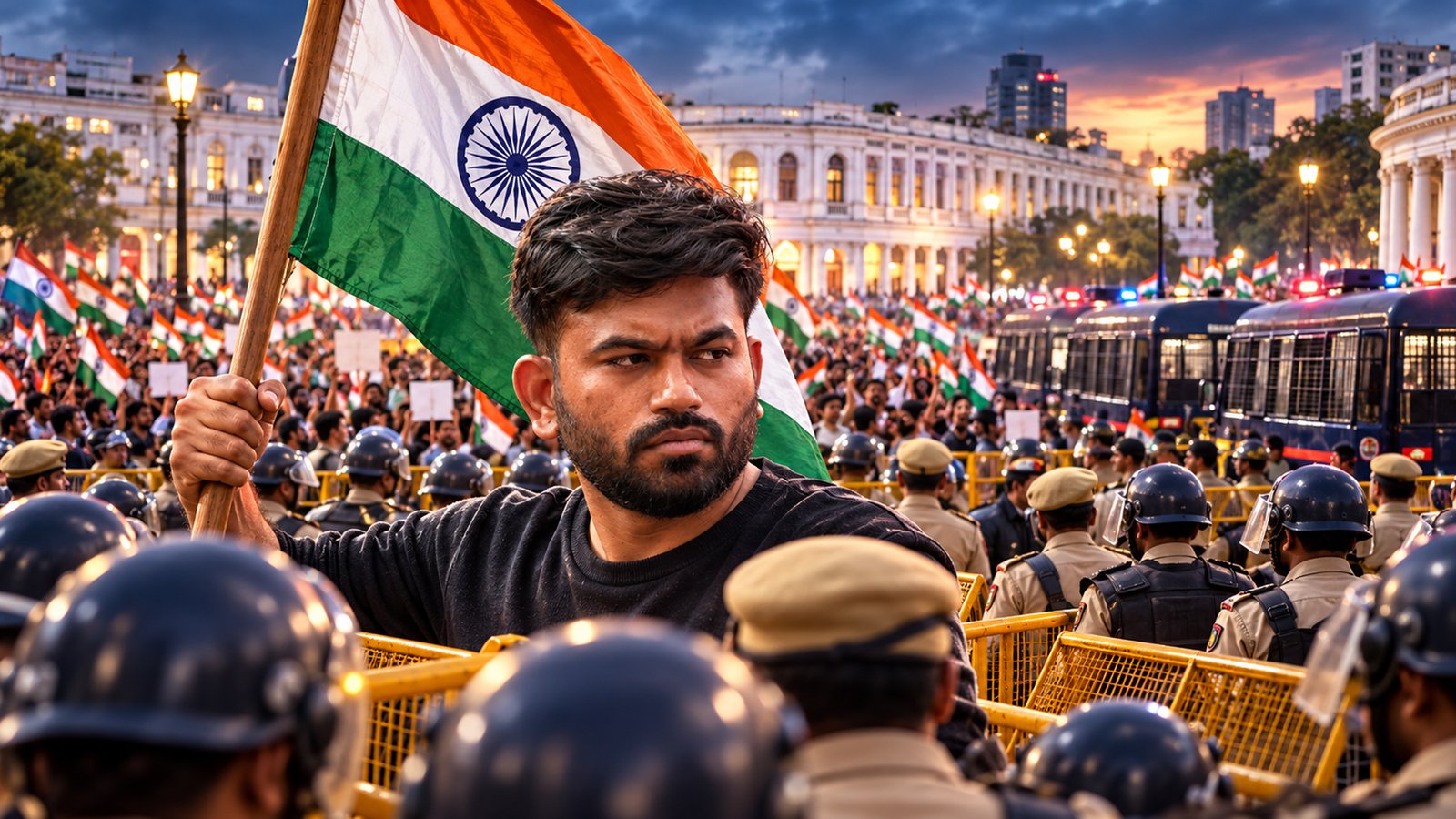
Delhi witnessed fresh unrest on Friday as a planned Tricolour march by the youth-led Cockroach Janta Party (CJP) triggered widespread police deployment, road restrictions and the detention of around 150 people. The developments brought renewed attention to the growing use of digital platforms to organise protests and the challenges authorities face in managing large gatherings in the national capital.
The march, called ‘Lehra Do Tiranga’, was planned for Connaught Place by CJP founder Abhijeet Dipke. The group urged supporters to carry the national flag and raise concerns about alleged irregularities in electoral rolls. Despite restrictions around the proposed venue, protesters gathered at Connaught Place and Mandi House, prompting police to detain demonstrators.
The day’s events also highlighted the growing role of social media, online mobilisation and digital surveillance in public demonstrations.
Heavy security and surveillance in central Delhi
Delhi Police deployed more than 6,000 personnel across key locations, including Connaught Place, Central Park, Mandi House and nearby areas. Additional Central Armed Police Forces were also deployed as authorities prepared for the planned gathering.
Security measures included barricades, cordons and an increased police presence around sensitive locations. Reports also highlighted an expanded CCTV network and the use of surveillance measures to monitor crowds and manage traffic.
Central Park was closed on October 16 and 17 by the New Delhi Municipal Council for administrative reasons. Police cited the absence of permission, restrictions on public gatherings and prohibitory orders while preventing demonstrators from assembling at the site.
The arrangements affected movement around central Delhi, with traffic diversions possible on several roads. Commuters were advised to plan their journeys and follow directions from traffic personnel.
The heavy deployment demonstrated how authorities are increasingly relying on coordinated security operations and monitoring systems to manage large public gatherings in crowded urban centres.
Abhijeet Dipke detained before march
Police visited Dipke’s residence in Jhandewalan earlier in the day and served him a notice asking him to refrain from activities that could affect the rights of citizens, traders, commuters and others.
Dipke had announced the march after CJP leaders Saurav Das and Ashutosh Ranka were sent to five days of judicial custody following their entry into Jantar Mantar, which had recently been removed from the list of designated protest sites.
Police detained Dipke while he was on his way to Connaught Place. He was taken to Jafarpur Kalan police station, according to reports.
Dipke maintained that the gathering was intended to demonstrate the right to wave the national flag. The police, however, cited preventive measures and restrictions on public gatherings.
The detention did not stop people from assembling. Protesters arrived carrying the Tricolour, while police continued removing demonstrators from restricted areas. By Friday evening, around 150 people had been detained, according to police sources.
Student groups join demonstrations
A parallel demonstration took place near Mandi House, where student activists and Left organisations raised concerns about the Special Intensive Revision (SIR) of electoral rolls and demanded the resignation of Chief Election Commissioner Gyanesh Kumar.
All India Students’ Association chief Neha Bora was also detained while on her way to join the demonstration.
The protests followed allegations by CJP and opposition groups that the electoral roll revision could remove legitimate voters from the lists. Critics have raised concerns about the possible impact on voting rights, while the Election Commission and the government have denied allegations of political bias.
The issue has expanded beyond electoral administration into a wider debate over democratic participation, freedom of expression and the right to peaceful assembly.
From online satire to street protests
The Cockroach Janta Party began as an online movement in May after a remark comparing unemployed young people to cockroaches sparked a satirical response. Dipke and his supporters adopted the label and used it to draw attention to unemployment, examination paper leaks and concerns about government accountability.
The movement subsequently grew beyond social media, organising demonstrations and attracting support from students and other groups. Earlier protests over examination-related concerns contributed to pressure that led to the resignation of former education minister Dharmendra Pradhan in July.
Its current campaign focuses on electoral reforms and demands for accountability from the Election Commission.
Digital platforms have helped the group communicate its demands, circulate videos and mobilise supporters across cities. Dipke had also appealed to people unable to travel to Delhi to organise flag gatherings in their own communities.
However, the latest events show that online mobilisation does not guarantee access to physical protest venues. Police restrictions, road closures and preventive detentions can significantly affect how quickly crowds assemble and how demonstrations unfold.
Digital rights and public safety in focus
The Delhi protests raise wider questions about the relationship between technology, public order and civil liberties. Social media has made it easier for protest organisers to reach large audiences, while CCTV systems and other monitoring tools give authorities additional ways to observe crowds and coordinate security.
These technologies can support traffic management and help prevent violence. At the same time, their use during demonstrations raises questions about privacy, the monitoring of political activity and safeguards for peaceful protesters.
The immediate dispute concerns electoral rolls and protest permissions, but the wider issue is how democratic societies balance public safety with citizens’ constitutional freedoms.
As the CJP continues its campaign, the response to future demonstrations will remain closely watched. The events in Delhi underline that digital mobilisation is increasingly shaping public protest, while the handling of those gatherings remains a test of transparency, accountability and the protection of civil liberties.