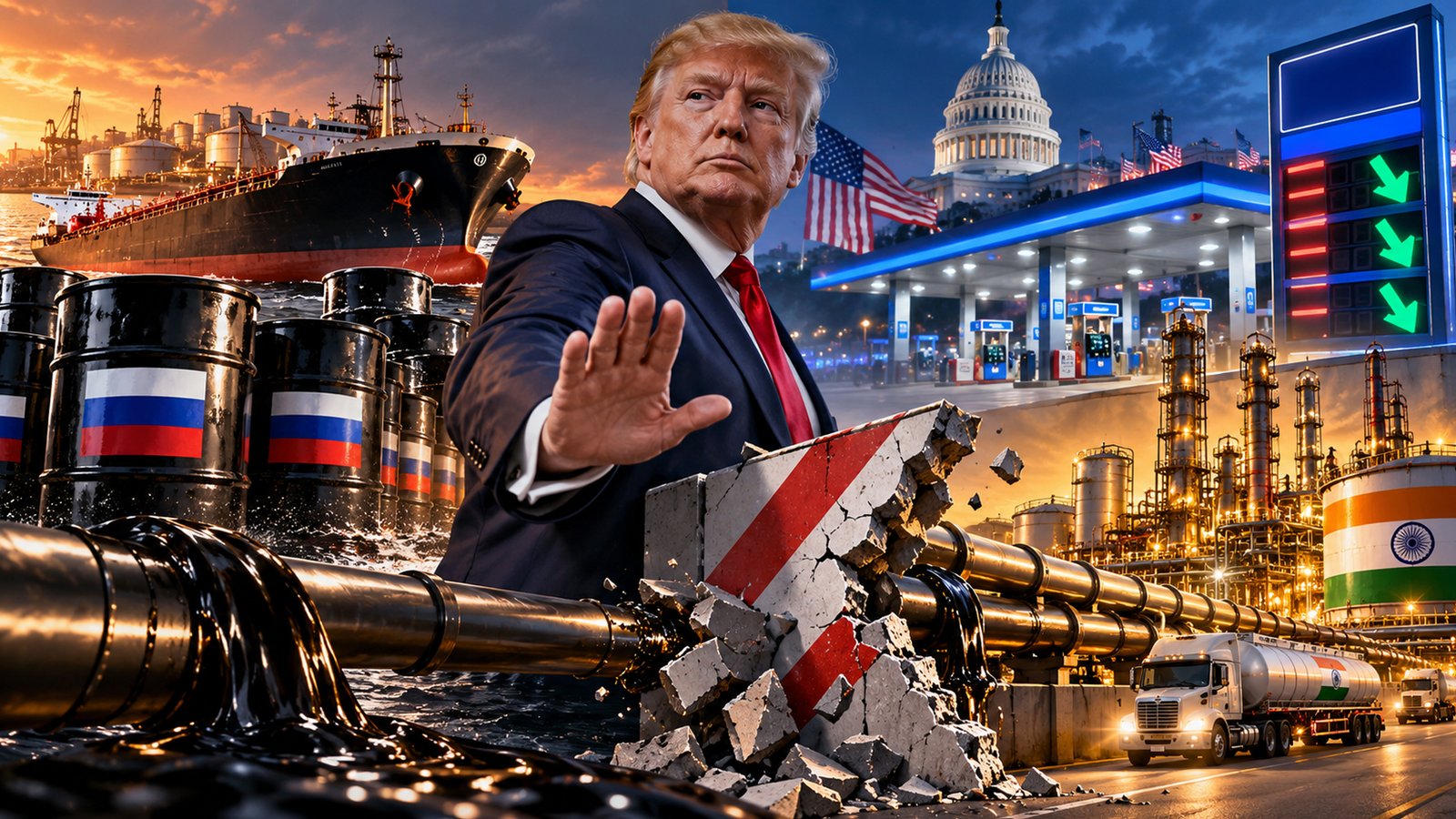
US President Donald Trump has waived several sanctions, restrictions and tariffs targeting Russia under a new law designed to increase pressure on Moscow over its war against Ukraine. The decision offers relief to major Russian oil buyers, including India and China, and comes as the American administration seeks to contain rising fuel prices ahead of the November 3 midterm elections.
Trump signed the executive order on October 16, invoking a provision of the Lindsey O. Graham Sanctioning Russia and Iran Act of 2026 that allows the president to suspend certain measures if he determines that doing so serves US national interests.
The move came just days before the new restrictions were due to take effect. It marks a significant shift in the administration’s approach, as the legislation had been intended to limit Russia’s ability to finance its military campaign in Ukraine through energy exports and international trade.
The waiver does not remove every US sanction against Russia. Instead, it suspends specified measures under the new law while leaving existing sanctions imposed through earlier executive orders in place.
The Graham Act, signed into law on September 18, was designed to increase the economic cost of Russia’s invasion of Ukraine, which began in February 2022.
The legislation gave Washington the authority to impose tariffs of up to 500% on Russian goods entering the United States, subject to exceptions. It also provided for tariffs of up to 100% on goods imported from the five largest buyers of Russian crude oil and natural gas, as well as countries identified as major facilitators of Russian sanctions evasion.
These measures were intended to pressure countries that continue buying Russian energy and discourage them from supporting Moscow’s economy.
However, Trump has now waived the application of specified duties and sanctions under the legislation. He has also directed officials to monitor Russian oil and gas purchases and report developments that could justify further action.
The president submitted the required certification to Congress, stating that the waiver was in the national interest of the United States.
Energy costs have become a growing concern for American households and businesses. Higher diesel prices can raise transport, farming and manufacturing expenses, adding to the cost of goods and services.
The ongoing US-Israeli war on Iran has contributed to pressure on global energy markets. Further restrictions on Russian oil supplies could tighten availability and push prices higher, particularly if buyers struggle to replace their existing sources.
The administration’s decision to ease some restrictions is therefore linked to concerns about fuel affordability and inflation.
The timing is also politically significant. The November 3 midterm elections will determine whether Trump’s Republican Party retains control of both chambers of Congress. Higher fuel prices have become an important issue for voters, making the cost of energy a concern for the administration.
Trump’s recent decision to ease restrictions on Russian diesel exports has also drawn criticism. The arrangement is intended to help supply fuel to global markets and reduce price pressures, but opponents argue that it could generate revenue for Russia while the war in Ukraine continues.
India stands to benefit from the suspension because it is one of the world’s major importers of Russian crude oil. Russian supplies have become an important part of India’s efforts to secure energy at competitive prices.
The proposed US tariffs had raised concerns in New Delhi because they could have made Indian exports to the American market more expensive. The legislation’s provisions could have exposed countries purchasing Russian energy to additional trade penalties.
By suspending the specified duties, Trump has reduced the immediate threat of those additional tariffs under the Graham Act. The decision may also give Indian refiners greater flexibility when evaluating crude oil purchases from different suppliers.
China, another major buyer of Russian oil, also faced potential exposure to the proposed measures. Both countries had objected to the prospect of Washington using tariffs to influence their energy trade with Moscow.
However, the waiver does not automatically mean petrol and diesel prices will fall in India. Domestic fuel prices depend on international crude oil rates, the rupee-dollar exchange rate, refining expenses, taxes and decisions by oil marketing companies.
India’s immediate benefit is a reduction in the risk of additional US trade penalties under the suspended provisions, rather than a guaranteed reduction in fuel costs.
The decision has prompted criticism from US lawmakers who believe easing sanctions could weaken Washington’s pressure on Moscow.
Representative Don Beyer, a Democrat from Virginia, accused Trump of undermining Ukraine and disregarding the intention of Congress in passing the legislation. Critics argue that continued Russian energy exports provide Moscow with revenue that can support its military operations.
The move also comes amid differences between Washington and European governments over how to maintain pressure on Russia. European leaders have reaffirmed their support for Ukraine as the conflict continues.
Trump’s waiver remains subject to review, and his administration can take further action if it considers additional restrictions necessary. Officials will continue monitoring Russian energy purchases and possible sanctions evasion.
The decision offers temporary relief to major Russian oil buyers, including India, but leaves uncertainty over future US trade policy. Washington now faces the challenge of balancing pressure on Russia with the need to keep fuel prices under control at home.