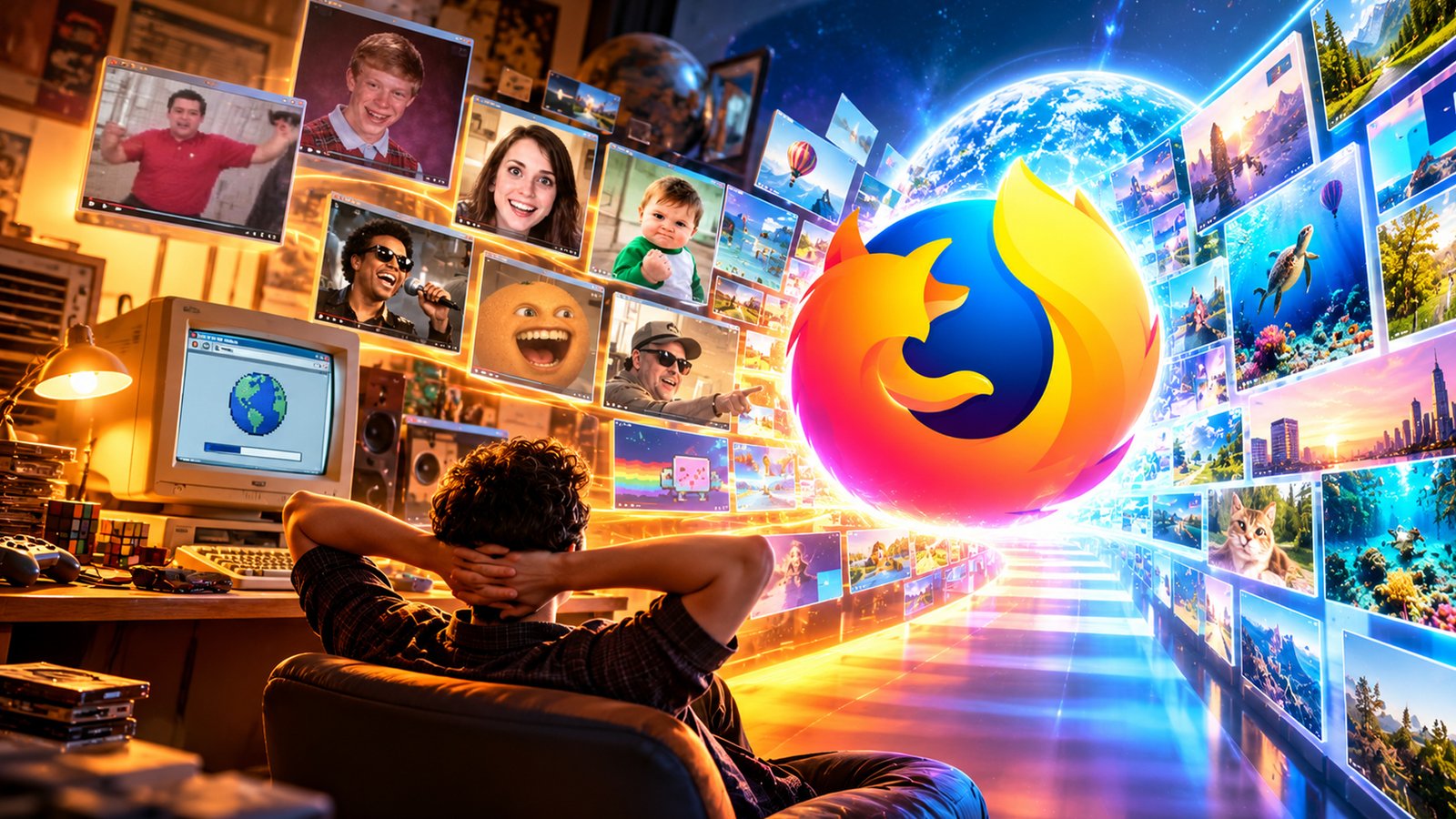
Mozilla has launched its “Come Back to Firefox” campaign, bringing together some of the internet’s most recognisable viral personalities to encourage former users to return to its web browser. Announced on October 25, 2026, the campaign combines nostalgia for the early internet with a message about online privacy, artificial intelligence (AI) and the growing influence of major technology companies.
The campaign comes as browsers increasingly compete to offer AI-powered features, personalised services and integrated digital tools. Mozilla wants Firefox to stand apart by giving users greater control over their browsing experience rather than pushing them towards features they may not want.
The initiative is aimed particularly at people who once used Firefox but switched to alternatives such as Google Chrome, Apple Safari or Microsoft Edge. Mozilla hopes to remind them why they chose Firefox originally while demonstrating how the browser has evolved.
Internet personalities return for campaign
The campaign reunites familiar faces from the early days of viral internet culture, including Numa Numa Guy, Bad Luck Brian, Overly Attached Girlfriend, Annoying Orange, Success Kid and Where the Hell Is Matt? Other personalities featured include Tay Zonday, Chuck Testa, Apparently Kid, Kelly of “Shoes” fame and the creator associated with Evolution of Dance.
These personalities became popular when ordinary people could gain worldwide attention through homemade videos and internet memes. Their return is intended to evoke a period when the web felt more personal, spontaneous and community-driven.
The advertisements connect these familiar characters with present-day frustrations. Overly Attached Girlfriend represents concerns about excessive tracking, while Dancing Matt is used to highlight worries about companies collecting and selling personal information. Annoying Orange provides a humorous way to question unwanted AI features.
Mozilla is using humour rather than a conventional product demonstration to communicate its message. The idea is to make people reconsider their browser choices without turning the campaign into a technical lecture.
The campaign was developed with independent creative agency We Believers, with production handled by nobodys and direction by the Sunny Sixteen collective. Two 30-second advertisements began airing in the United States on October 25, including during NBC’s NFL coverage. Mozilla plans to extend the campaign to Germany, France and the United Kingdom.
Privacy and control remain central
Firefox has built its identity around offering an alternative to browsers developed by some of the world’s largest technology companies. Its latest campaign highlights tracking protection, customisation and user control as reasons to reconsider the browser.
Mozilla is also promoting a free built-in virtual private network (VPN), designed to help users keep browsing activity more private without requiring a separate download or subscription. The company is highlighting AI Controls, which allow users to decide whether and when they want to use AI features.
Firefox also offers an ad-blocking option on iOS intended to reduce unwanted advertisements and trackers. These additions form part of Mozilla’s effort to make privacy and user choice practical benefits rather than abstract promises.
However, a privacy-focused browser does not guarantee complete anonymity. Websites and online services can still collect information through accounts, cookies and other methods, depending on the settings and services involved.
Firefox expands beyond its traditional strengths
Mozilla is also working to ensure that Firefox remains relevant as browsing habits change. The company has highlighted technical partnerships with Nvidia and Mistral, extending its work across gaming and AI-related capabilities.
It has introduced a dedicated enterprise browser offering organisations greater control over data and access to specialist support. These developments suggest that Mozilla’s strategy extends beyond winning back individual users to serving businesses and adapting to new computing demands.
The company has also refreshed Firefox’s visual identity and established a sports partnership with Wrexham AFC. Its planned presence around the 2026 FIFA World Cup is another attempt to connect the browser with audiences outside traditional technology circles.
These initiatives are important because privacy alone may not persuade users to switch. Performance, website compatibility, security updates, extension support and convenience remain central to browser decisions.
Can nostalgia bring users back?
Google Chrome benefits from its close connection with Google’s services, while Safari is integrated into Apple’s devices and Edge comes with Windows. Such arrangements make default browsers convenient and can discourage people from switching, even when alternatives offer features they prefer.
Mozilla’s campaign attempts to challenge that habit by reminding users that they have a choice. The company is betting that familiar internet personalities, combined with useful modern features, will give former users a reason to take another look at Firefox.
The campaign’s success will ultimately depend on whether the renewed attention leads to sustained user growth. Nostalgia can create interest, but the browser must also deliver a reliable experience that meets everyday needs.