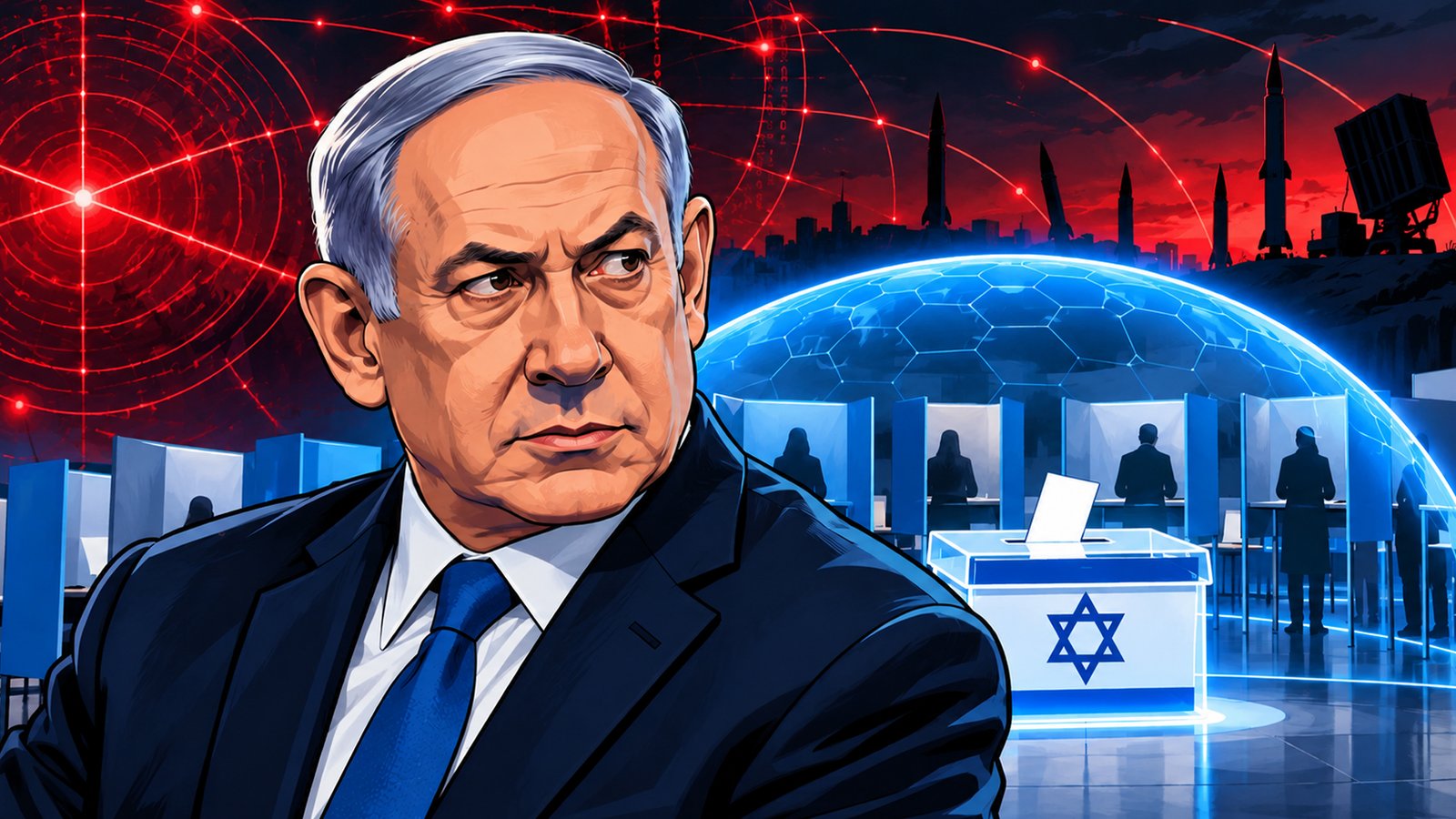
Israeli Prime Minister Benjamin Netanyahu has warned Iran and its regional allies against attempting to disrupt Israel’s October 27 parliamentary election, saying the country’s military is prepared to respond to any hostile action. His statement has intensified attention on election security, regional tensions and the growing role of digital communication in political campaigns.
In a video released by his office on October 25, Netanyahu said Israeli intelligence had identified indications that Iran and groups aligned with Tehran could attempt attacks to interfere with the vote. He warned that any such action would trigger a strong response from Israel.
“Don’t test us. You will suffer disproportionate blows,” Netanyahu said, adding that the Israel Defence Forces (IDF) were prepared for both defensive and offensive operations.
The warning came just two days before Israelis were scheduled to elect all 120 members of the Knesset, the country’s parliament. Netanyahu, Israel’s longest-serving prime minister, has made national security a central issue in his campaign, presenting his handling of the conflict with Iran as a key reason for voters to support him.
The latest statement reflects the continuing strain between Israel and Iran following the conflict that began with US-Israeli attacks on Iran in February 2026. The confrontation triggered Iranian strikes against Israel and Gulf states, raising concerns about the possibility of a wider regional conflict. Although direct exchanges between Israel and Iran had subsided by June, tensions have remained high.
Netanyahu has previously suggested that Iran could attempt to influence the election through direct attacks or the actions of allied groups, including Hamas in Gaza and Hezbollah in Lebanon. However, his latest warning did not publicly identify a specific planned operation, and the intelligence claims have not been independently confirmed.
The developments highlight the importance of protecting critical infrastructure and maintaining reliable information during an election period. In a country facing persistent security threats, military preparedness, intelligence monitoring and communication between authorities and the public can all influence how voters experience an election.
The technology angle has also become visible through the use of social media and artificial intelligence in political messaging. On October 25, Netanyahu shared an AI-generated image depicting a mushroom cloud over Tel Aviv, alongside a message describing Iran as an existential threat. The post underscored how synthetic imagery can be used to communicate political arguments and evoke fear during an already tense campaign.
AI-generated images can spread rapidly online, making it important for audiences to distinguish between authentic photographs, digitally created visuals and hypothetical scenarios. Such content does not, by itself, establish that an attack has occurred or that a particular threat is imminent. In a high-stakes election, the distinction between verified intelligence, political claims and online imagery becomes especially significant.
There is also a broader distinction between military threats and cyber interference. Netanyahu’s public warning focused on possible attacks by Iran and its allies, rather than announcing a confirmed cyberattack or a specific hacking operation against Israel’s electoral systems. Nevertheless, the episode places election security in a wider context in which physical attacks, online influence campaigns and the circulation of misleading material can affect public confidence.
Israel’s election will determine the composition of the Knesset and could shape the country’s approach to Iran, regional diplomacy and national security. Netanyahu has argued that his experience is essential to confronting threats from Tehran. His opponents, however, have questioned his handling of the conflict and the emphasis placed on military confrontation during the campaign.
Reports have also described tensions surrounding an unspecified military directive and a possible disagreement between Netanyahu and IDF Chief of Staff Lieutenant General Eyal Zamir. Netanyahu dismissed the reported confrontation as false. Opposition leader Yair Lapid criticised the prime minister, alleging that an escalation could be used to delay the election. These remain competing political claims, and no confirmed decision to postpone the vote had been announced in the reports available on October 26.