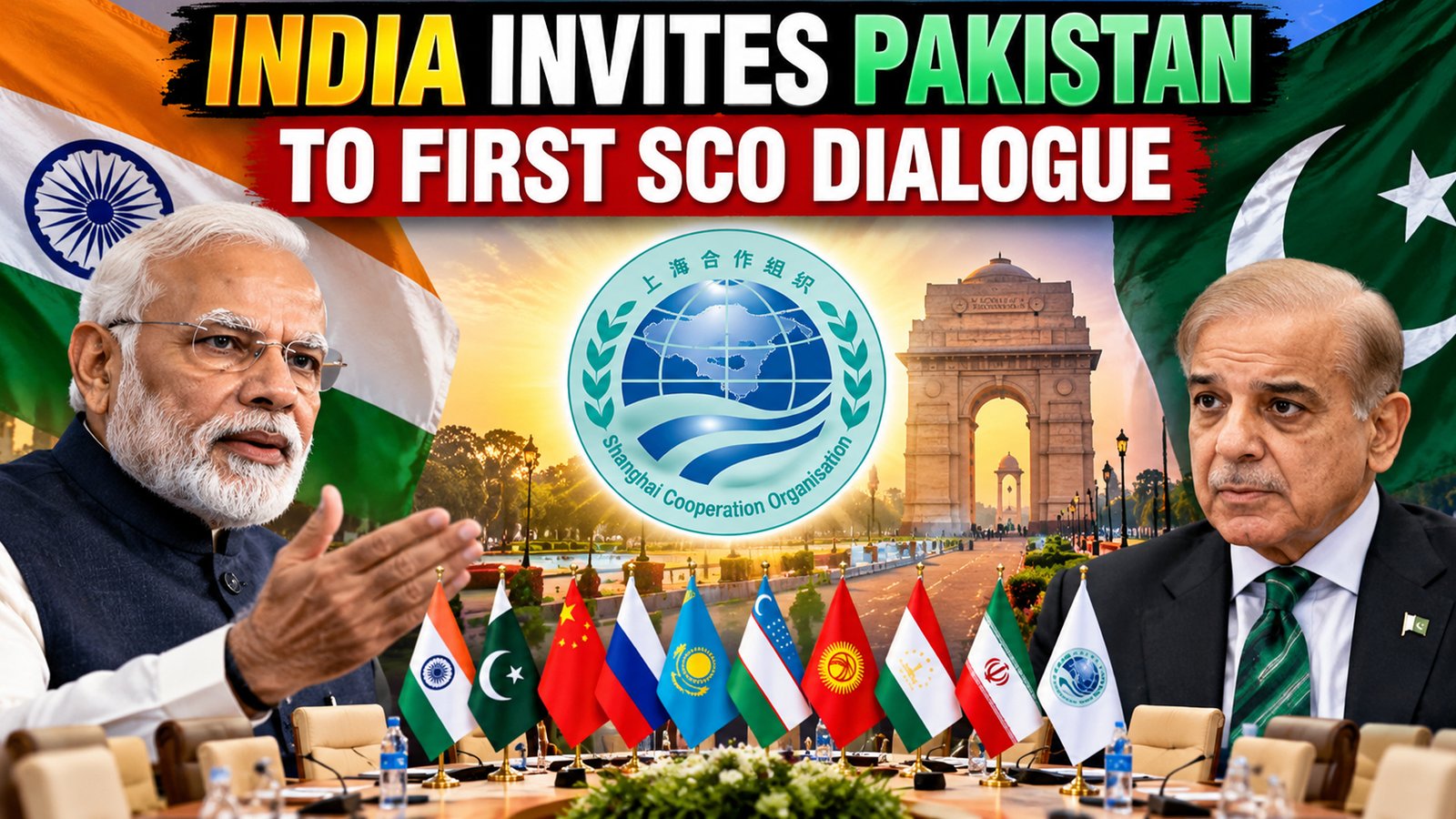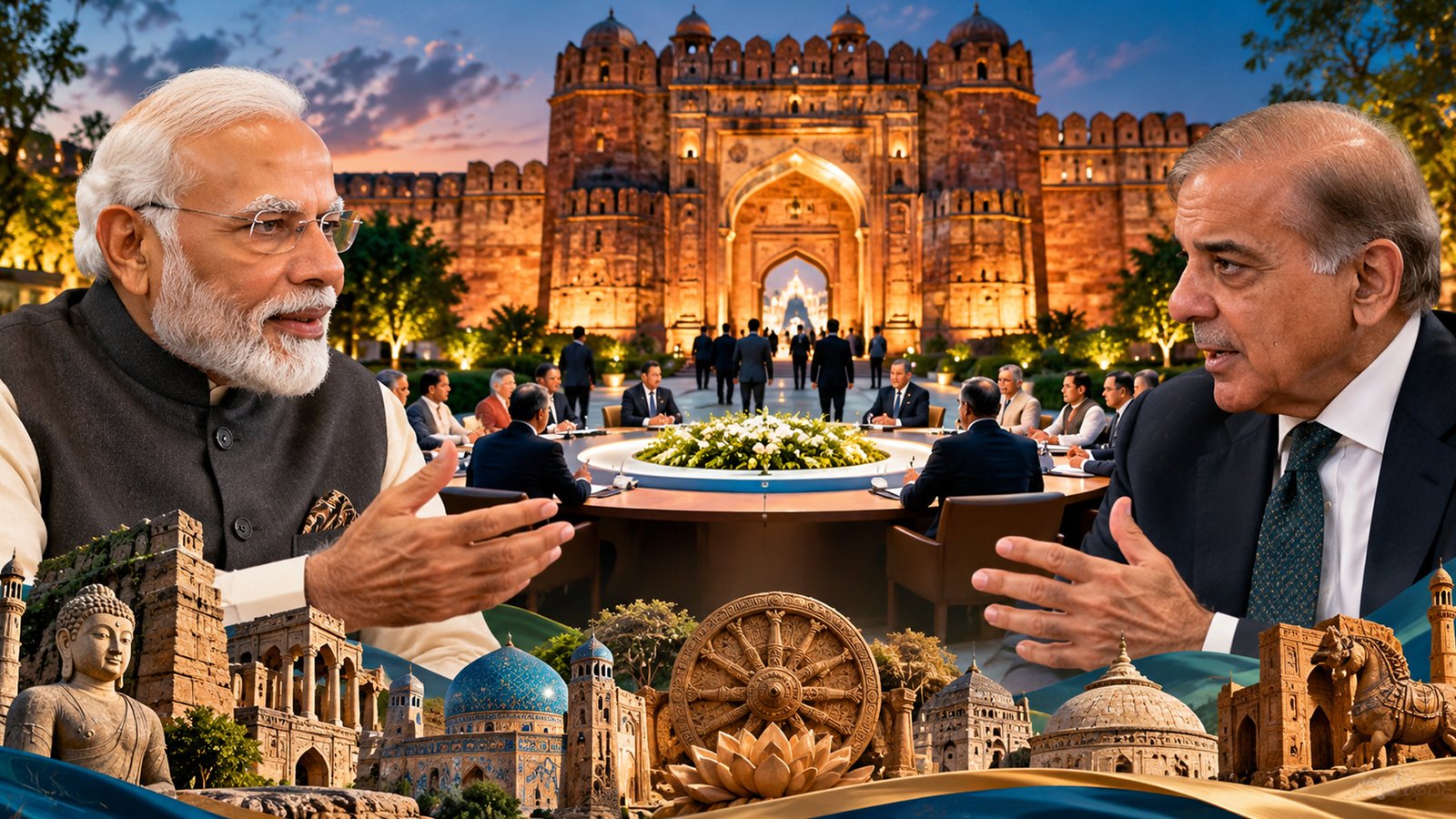
India has invited Pakistan’s Minister for National Heritage and Culture, Aurangzeb Khan Khichi, to attend the inaugural Shanghai Cooperation Organisation (SCO) Civilisational Dialogue Forum in New Delhi from November 20 to 22. The invitation has been extended to all 10 members of the regional grouping and comes at a time when India-Pakistan relations remain strained following the military confrontation in May 2025.
The forum is expected to bring together culture ministers and representatives from SCO member states, along with participants from observer countries and dialogue partners. Prime Minister Narendra Modi is expected to inaugurate the event, which is planned at Purana Qila, the historic 16th-century fort in the national capital. More than 25 countries are expected to be represented, according to reports citing diplomatic sources.
Pakistan has not yet confirmed whether Khichi will attend or who will lead its delegation. If he travels to India, it would mark the first visit by a Pakistani minister since May 2023, when then foreign minister Bilawal Bhutto Zardari visited Goa for an SCO Council of Foreign Ministers meeting. It would also be the first such ministerial visit since the military hostilities between India and Pakistan in May 2025.
The invitation is part of India’s engagement through the multilateral SCO platform and should not, by itself, be taken as a sign of renewed bilateral dialogue. Officials have said all member countries were invited because India is hosting the forum. Relations between the neighbours deteriorated further after the Pahalgam terror attack and India’s subsequent Operation Sindoor in May 2025.
The Civilisational Dialogue Forum was proposed by Modi at the SCO Council of Heads of State summit in Tianjin, China, in September 2025. The initiative was subsequently adopted by the grouping. Defence Minister Rajnath Singh formally announced India’s plan to host the first forum while addressing the SCO Council of Heads of Government meeting in Dushanbe, Tajikistan, on October 20, 2026.
The Ministry of Culture is organising the event in partnership with the Ministry of External Affairs. Its main objective is to encourage cultural exchange, highlight shared heritage and strengthen people-to-people connections across the Eurasian region. Discussions are expected to cover historical links, traditions, art and literature, with cultural diplomacy providing a channel for engagement even when political relations remain difficult.
The SCO has 10 member states: India, Pakistan, China, Russia, Belarus, Iran, Kazakhstan, Kyrgyzstan, Tajikistan and Uzbekistan. India became a full member in 2017. Afghanistan and Mongolia have observer status, while the organisation also works with dialogue partners. The grouping addresses regional security, economic cooperation, connectivity and cultural exchange.
The invitation comes as Pakistan holds the SCO’s rotating chairmanship for the 2026-27 term and prepares to host the next summit of the grouping’s leaders in 2027. India has continued participating in SCO meetings involving Pakistan, keeping multilateral engagement separate from its bilateral position. In September, India’s SCO national coordinator, Alok Dimri, travelled to Islamabad for a meeting connected with the organisation’s work programme. The visit marked a rare senior-level contact between the two countries.
External Affairs Minister S. Jaishankar travelled to Islamabad in October 2024 for an SCO Council of Heads of Government meeting. He did not hold bilateral talks with Pakistani leaders during that visit. The latest invitation similarly reflects the need for member states to participate in the organisation’s activities rather than confirming a change in India’s approach towards Pakistan.
At an SCO meeting in Dushanbe on October 20, Singh called for collective action against terrorism, urging member countries to avoid double standards in dealing with those who finance, support or shelter terrorist groups. Pakistan’s Deputy Prime Minister and Foreign Minister Ishaq Dar was present. Singh’s remarks underlined the continuing security differences between New Delhi and Islamabad even as both countries participate in the same regional forum.
The November gathering will test whether cultural engagement can create space for dialogue between countries whose political ties remain tense. A Pakistani minister’s participation, if confirmed, would be symbolically significant, but the forum is not designed as a bilateral India-Pakistan negotiation. Its immediate focus is the civilisational links and cultural diversity shared by SCO members.
The key uncertainty remains Pakistan’s response to the invitation. Until Islamabad confirms its delegation, the possibility of a ministerial visit remains open. Regardless of attendance, India’s invitation to all 10 members signals its intention to proceed with the SCO initiative while maintaining its concerns over terrorism and the state of bilateral relations.