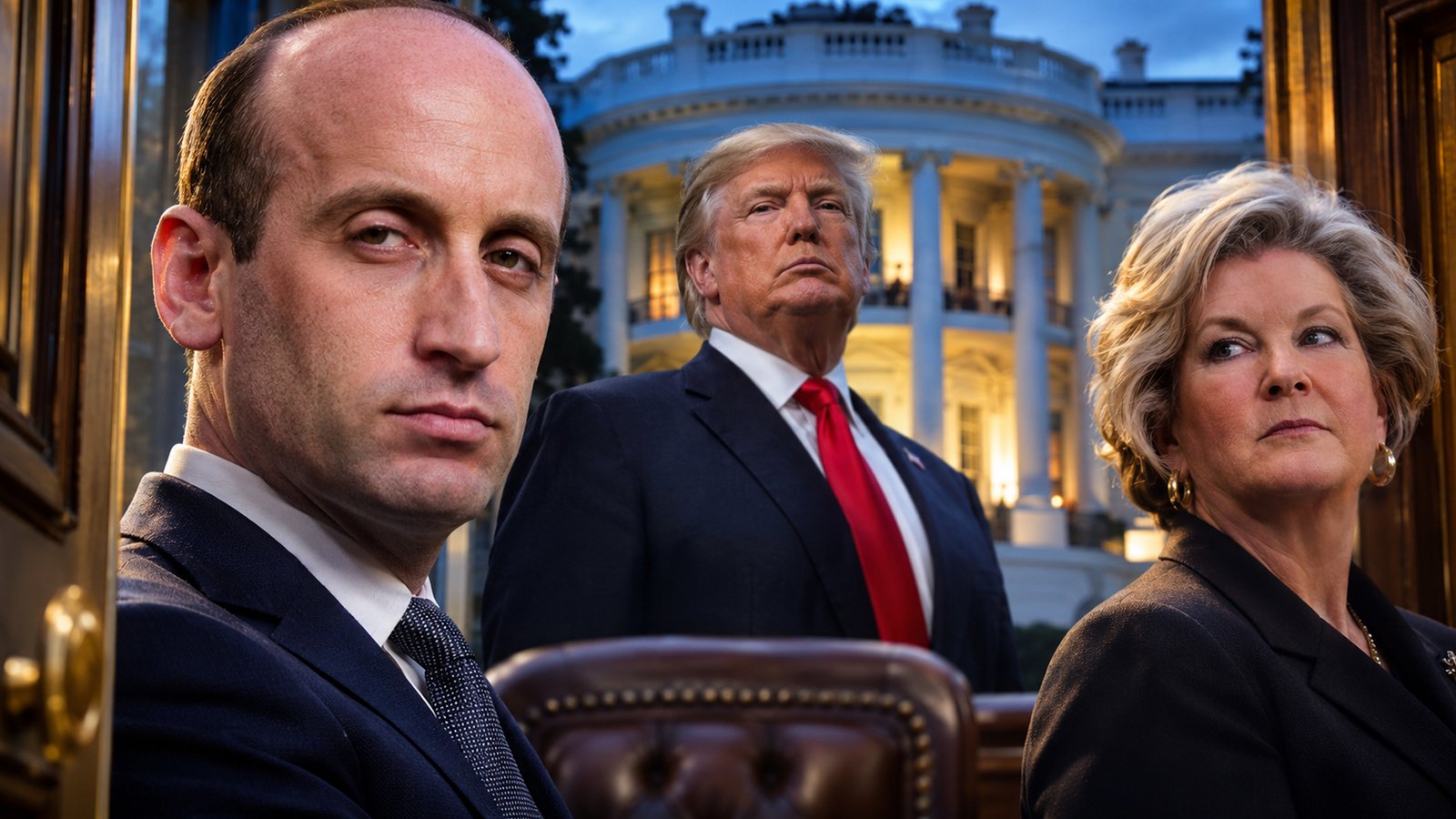
US President Donald Trump has appointed longtime adviser Stephen Miller as the new White House chief of staff, replacing Susie Wiles in a major leadership change following the Republican Party’s disappointing performance in the midterm elections. The decision comes at a challenging political moment for Trump, with Democrats gaining ground in Congress and preparing to intensify scrutiny of his administration.
Miller, 41, is among Trump’s closest advisers and one of the most influential figures in his political circle. Known for shaping the administration’s hardline immigration policies, he has played a central role in developing Trump’s domestic agenda, particularly on border security, deportations and restrictions on immigration.
Trump announced the appointment on Friday, November 6, praising Miller’s loyalty and contribution to his administration. The president described him as a trusted adviser who had been part of his political journey from the beginning. Miller previously served as deputy chief of staff for policy and was closely involved in coordinating major White House initiatives.
His appointment gives him greater responsibility for managing the administration’s daily operations, coordinating policy decisions and ensuring that government departments work towards the president’s priorities. The chief of staff is one of the most powerful positions in the White House, serving as a key link between the president, senior advisers and Cabinet officials.
The leadership change follows a difficult midterm election for Republicans, who suffered significant setbacks and lost control of Congress. The results have weakened Trump’s political position and are expected to make it harder for him to push his legislative agenda during the remaining years of his presidency.
Democrats are preparing to use their strengthened position in Congress to investigate administration policies, scrutinise executive decisions and challenge Trump’s domestic and economic priorities. The change in White House leadership is therefore being viewed as an important step in preparing the administration for a more difficult political environment.
Miller’s elevation is particularly significant because of his influence over Trump’s immigration agenda. He has been one of the strongest advocates of tighter border controls, large-scale deportations and stricter immigration enforcement. His appointment suggests that the president intends to maintain his existing approach rather than soften his position following the Republican setbacks.
Miller began working with Trump during the 2016 presidential campaign as a speechwriter. He subsequently became a key policy adviser and helped shape several of the administration’s most prominent decisions. His close relationship with Trump has allowed him to exercise considerable influence over government policy, even before taking up the chief of staff position.
His new responsibilities are expected to extend beyond immigration. He will also play an important role in coordinating the White House response to congressional investigations, managing political priorities and ensuring that Trump’s agenda remains on track despite growing opposition.
Miller’s appointment has already drawn criticism from Democratic lawmakers. Robert Garcia, a Democratic representative from California expected to lead the House Oversight Committee, criticised the decision and indicated that Miller’s role in immigration enforcement would attract congressional attention.
The appointment also marks the departure of Susie Wiles, who became the first woman to serve as Trump’s White House chief of staff. A veteran political strategist from Florida, Wiles was instrumental in managing Trump’s successful 2024 presidential campaign and was widely credited with bringing greater discipline and organisation to his political operations.
Wiles had worked with Trump since his first presidential campaign in 2016 and remained one of his most trusted political advisers. Her experience in managing campaigns and maintaining relationships within the Republican Party made her an important figure in his return to the White House.
Reports said Wiles submitted her resignation to Trump on Thursday night, November 5, before the president announced Miller as her replacement. Trump praised her contribution and indicated that she would continue to remain associated with his political organisation.
Wiles also expressed pride in her time at the White House, pointing to the administration’s work on border security, tax reductions and economic policies. Her departure comes after she disclosed a breast cancer diagnosis in March 2026. She underwent treatment and subsequently indicated that medical tests showed no remaining evidence of the disease.
She had also attracted attention following candid interviews with Vanity Fair published in December 2025. Her remarks about Trump and other senior administration officials generated considerable discussion in Washington, although she criticised the magazine’s presentation of the conversations.
The appointment of Miller represents a significant change in the White House’s leadership structure as Trump enters a more challenging phase of his presidency. With Democrats gaining greater influence in Congress, the administration is likely to face increased political resistance and closer scrutiny of its decisions.
Miller’s experience in policy development and his close association with Trump could help the president maintain his priorities through executive action when legislative support becomes difficult to secure. However, his hardline political positions could also deepen disagreements with Democrats and intensify tensions in Washington.