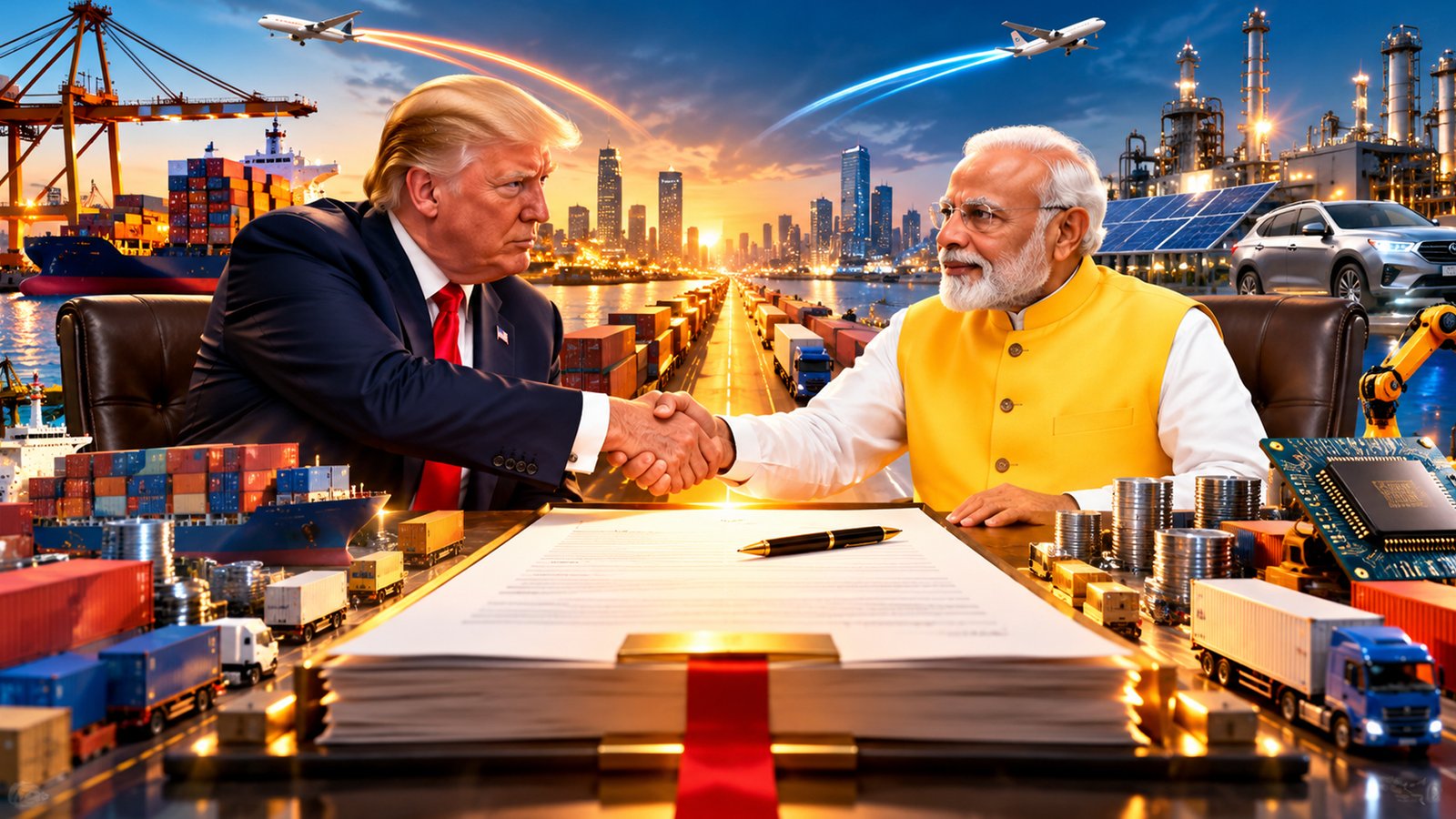
US President Donald Trump has said India and the United States are close to reaching a trade agreement, but indicated that the proposed pact would be very different from previous deals signed by Washington. His remarks have raised expectations of progress in negotiations that have continued for more than a year, although the two countries have yet to formally conclude the agreement.
Speaking to reporters at the Oval Office on Tuesday, October 20, Trump expressed confidence that the two sides would reach an understanding. Asked about the prospects of a deal, he said India and the US were “pretty close” to making one.
The US President also suggested that the agreement would follow a different approach from earlier trade pacts, without explaining what the changes would involve.
The comments come as New Delhi and Washington seek to resolve differences over tariffs, market access and trade terms. US Secretary of State Marco Rubio’s visit to India has added momentum to efforts to strengthen bilateral ties, with trade, energy, technology and defence among the key areas of discussion.
India and the US have been negotiating a bilateral trade agreement (BTA) aimed at expanding economic cooperation and improving access to each other’s markets. Both governments announced a framework for the first phase of the agreement in February, but changes in US tariff policy have complicated the process.
The negotiations have involved discussions on tariffs, goods traded between the two countries and the terms under which businesses could gain greater access to each other’s markets. Reaching an agreement could help reduce uncertainty for exporters and companies that depend on India-US trade.
India is seeking terms that protect its economic interests while improving its competitiveness against other countries exporting to the American market. The US, meanwhile, has pushed for better access for American businesses and a trade arrangement that Washington considers more balanced.
These differences have made the final stages of negotiations particularly important. While Trump’s latest comments suggest political willingness to move forward, the details of the agreement will determine how much it changes existing trade arrangements.
Commerce and Industry Minister Piyush Goyal has said the first tranche of the India-US bilateral trade agreement has been finalised and is undergoing legal drafting. The government hopes to complete the process and operationalise the agreement once the final details are settled.
Goyal has also held discussions with US Trade Representative Jamieson Greer, including meetings in Milwaukee and Washington earlier this month. The talks were aimed at resolving outstanding issues and moving the negotiations closer to completion.
Legal drafting is an important stage because negotiators must translate broad political understandings into precise commitments. The wording will establish the obligations of both countries and clarify how the agreement will be implemented.
However, finalising the first tranche does not mean the entire trade agreement has been signed or brought into force. The two governments must still complete the necessary steps before businesses can rely on any new terms.
Tariffs have been among the biggest sources of tension in India-US economic relations. Changes in American tariff policy have forced negotiators to revisit parts of the proposed agreement and assess how the new measures affect Indian exporters.
Higher tariffs can make Indian products more expensive in the US market, potentially reducing demand and affecting the competitiveness of businesses. Export-oriented sectors therefore have a direct interest in the outcome of the negotiations.
A trade deal could provide greater clarity on duties and market access, but its actual benefits will depend on the final tariff commitments and the products covered.
India and the US must also balance their commercial interests with broader strategic considerations. Both countries see value in closer economic ties, but each government must ensure that the terms meet its domestic priorities.
Trump’s comments came as Rubio visited India to discuss ways to strengthen the partnership. During his meetings with External Affairs Minister S Jaishankar, the two sides discussed trade, energy security, defence cooperation, technology and people-to-people ties.
Rubio has also said Washington is very close to finalising the trade agreement, indicating that US officials believe negotiations have made significant progress.
Energy has emerged as another important part of the relationship. The US wants to expand cooperation with India in areas such as energy trade and technology, while both countries are looking to diversify supply chains and strengthen economic resilience.
The discussions are taking place against the backdrop of differences over India’s purchases of Russian oil and Washington’s wider trade and foreign policy priorities. Despite these challenges, recent statements from officials on both sides suggest that they want to prevent disagreements from derailing the broader relationship.
Trump’s remarks have strengthened expectations that the India-US trade deal could move closer to completion. However, he did not provide a timeline for signing the agreement or explain precisely how it would differ from previous trade pacts.