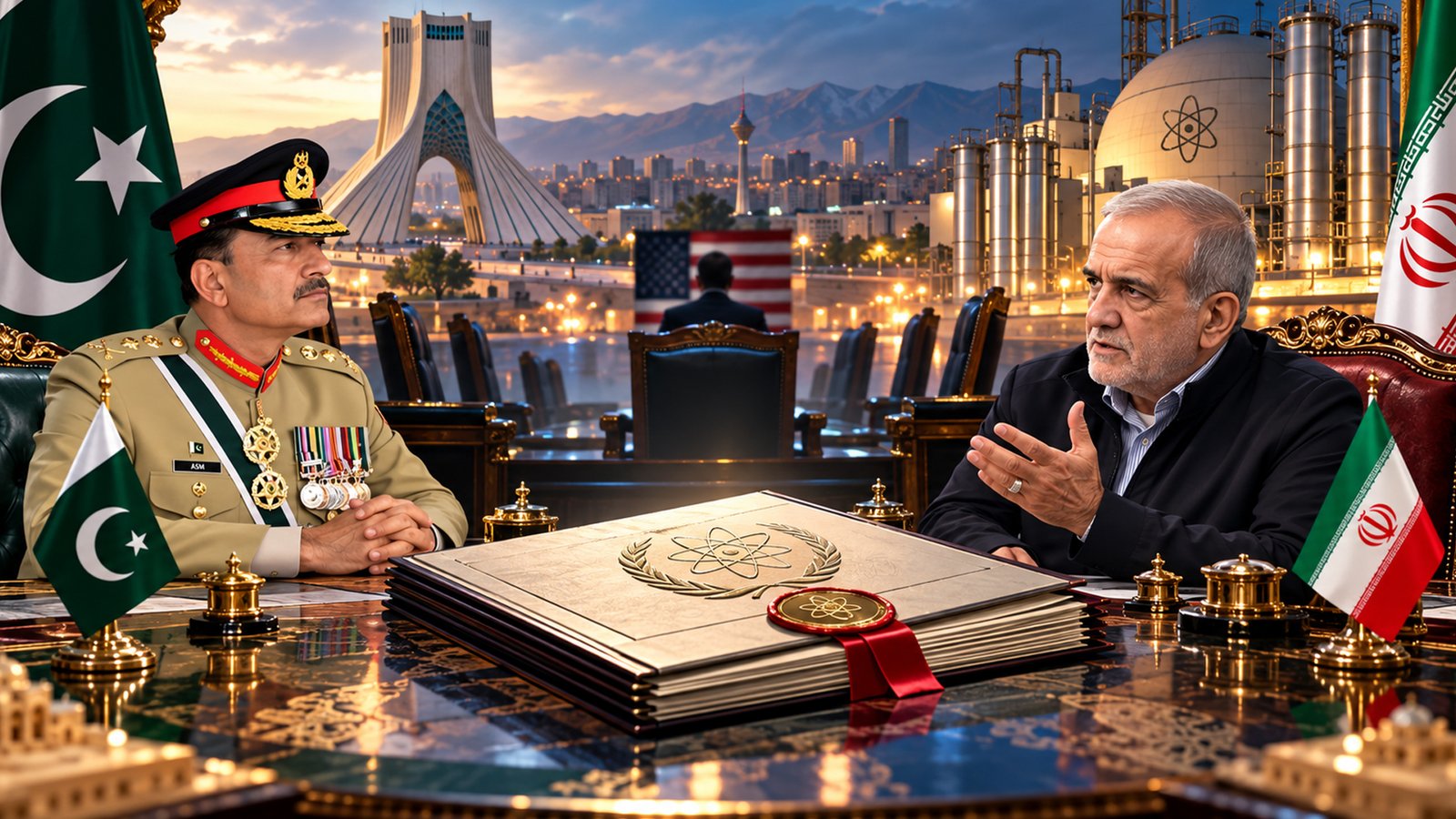
Pakistan’s army chief, Field Marshal Asim Munir, travelled to Tehran on October 20 in a fresh diplomatic push to prevent renewed fighting between Iran and the United States. The visit came amid fears of military escalation and growing uncertainty over efforts to restart stalled peace negotiations.
Munir met Iranian President Masoud Pezeshkian and Parliament Speaker Mohammad Baqer Qalibaf as Pakistan sought to use its links with both Tehran and Washington to bring the sides back to the negotiating table. Pakistan’s Interior Minister Mohsin Naqvi accompanied him on the visit.
However, the meetings produced no immediate breakthrough. Iranian officials made clear that Tehran would not resume negotiations with Washington until its key demands were addressed. These include the lifting of US sanctions, the removal of restrictions on Iranian ports and an end to hostilities across the region.
The visit highlights Pakistan’s growing role as a mediator in the US-Iran conflict, but also the difficulty of turning diplomatic contacts into a lasting agreement.
During his meeting with Munir, Pezeshkian discussed regional developments and efforts to restart diplomacy. Iranian officials reiterated that Washington could not expect negotiations to progress while continuing to apply economic and military pressure on Tehran.
Qalibaf also said the US needed to meet Iran’s conditions before it could regain the country’s trust. These demands include ending the US maritime blockade, lifting sanctions on Iranian oil exports and stopping military action across regional fronts.
The future of the Strait of Hormuz remains another major issue. The strategic waterway is a key route for global oil and gas shipments, and any prolonged disruption could push up energy prices and affect international trade.
Iran has also resisted proposals that would require it to transfer enriched nuclear material abroad. Tehran’s nuclear programme remains a major obstacle, with Washington demanding limits on uranium enrichment as part of any wider settlement.
The gap between the two sides suggests that restarting talks will require more than a mediator carrying messages between their capitals. Both governments must find terms they consider acceptable on security, sanctions and regional stability.
Pakistan has played a key role in communication between Washington and Tehran since the conflict began. Its earlier mediation efforts helped produce an interim agreement in June, but the arrangement unravelled when fighting resumed weeks later.
Munir’s latest visit was intended to revive that diplomatic channel and explore whether the two sides could return to negotiations before tensions escalated further.
Pakistan has access to both governments and has an interest in preventing a wider regional conflict. Renewed fighting could disrupt energy supplies, damage trade and create additional security challenges across the Middle East and South Asia.
However, Islamabad’s position is not straightforward. Pakistan has strengthened its defence ties with Saudi Arabia and Turkey at a time when regional tensions remain high. Its security commitments to Riyadh could complicate Tehran’s view of Pakistan as a neutral mediator.
Analysts say Pakistan remains an important intermediary, even as other countries, including Qatar, continue to facilitate communication between Iran and the United States.
Munir’s visit came amid growing concern that the ceasefire between Iran and the US could collapse. Washington has increased its military presence in the Middle East, while President Donald Trump has issued warnings suggesting that further military action remains possible.
The US rejected an Iranian proposal to end the conflict in September, adding to uncertainty over whether diplomatic efforts could succeed. The movement of additional American military assets into the region has raised concerns about a fresh confrontation.
Iran, meanwhile, has warned that any new US attack would be met with a response. Its leaders have argued that negotiations cannot succeed while the country faces military threats and economic restrictions.
Russian Foreign Minister Sergey Lavrov also visited Tehran shortly before Munir’s arrival. His discussions with Iranian leaders included the conflict, the Strait of Hormuz and efforts to end the fighting. The parallel visits underline Iran’s efforts to maintain several diplomatic channels rather than depend on a single intermediary.
The Strait of Hormuz is among the world’s most important energy routes, carrying a significant share of global oil shipments. A prolonged closure or disruption could affect supplies, raise crude oil prices and increase costs for import-dependent economies, including India. Higher energy prices could add to inflation, increase transportation costs and put pressure on businesses and households.
Munir’s Tehran visit has kept diplomatic contacts open, but it has not resolved the core disagreements between Iran and the US. Tehran wants sanctions relief and an end to military pressure before negotiations resume, while Washington continues to seek limits on Iran’s nuclear activities and broader security assurances.
The next stage will depend on whether both sides are willing to soften their positions and whether mediators can develop a proposal that addresses their competing demands. For now, Pakistan’s efforts offer a channel for dialogue, not a guarantee of peace. With military tensions continuing and the Strait of Hormuz at the centre of regional concerns, the coming weeks will be critical in determining whether diplomacy can prevent another round of fighting.